Flash Sale 70% Off
Give customers details about the banner image(s) or content on the template.
Write your store's popup content

An evil eye necklace is often worn for its symbolism, but the meaning behind the symbol is not exactly the same for everyone. Traditionally, the evil eye has been associated with protection from envy, ill will, misfortune, or unwanted attention across several cultural traditions. For some wearers, it represents protection or good fortune. For others, it carries a family connection, personal belief, or simply a reminder to stay grounded.
So, what does an evil eye necklace mean?
At its core, an evil eye necklace commonly represents a protective intention. The person wearing it may see the symbol as a reminder of safety, positive intentions, cultural heritage, or personal strength. Someone else may choose the same necklace because they appreciate its history and distinctive design.
The important part is that there is no single universal interpretation. The meaning of an evil eye necklace can change depending on cultural background, personal beliefs, and the reason it was chosen or given.
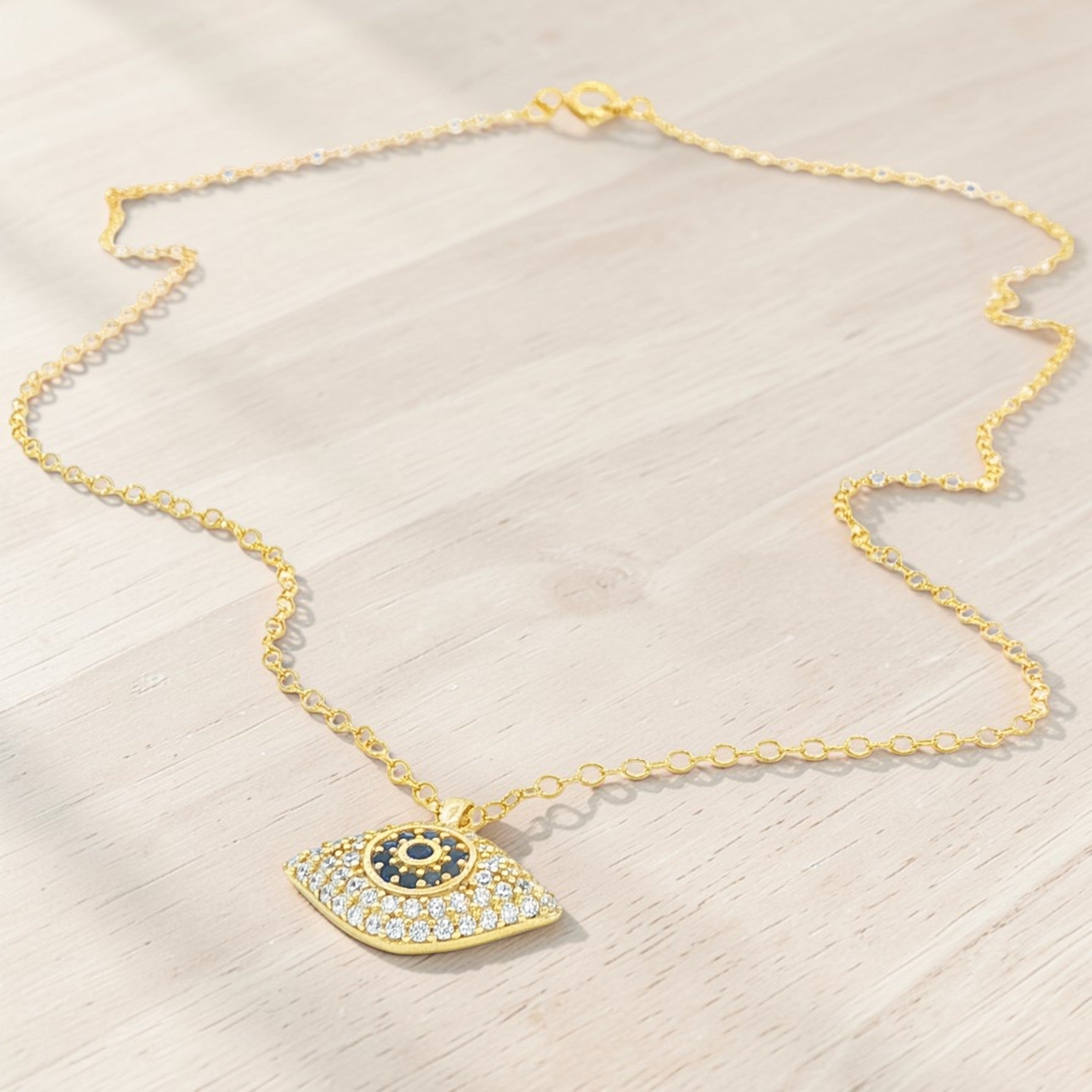
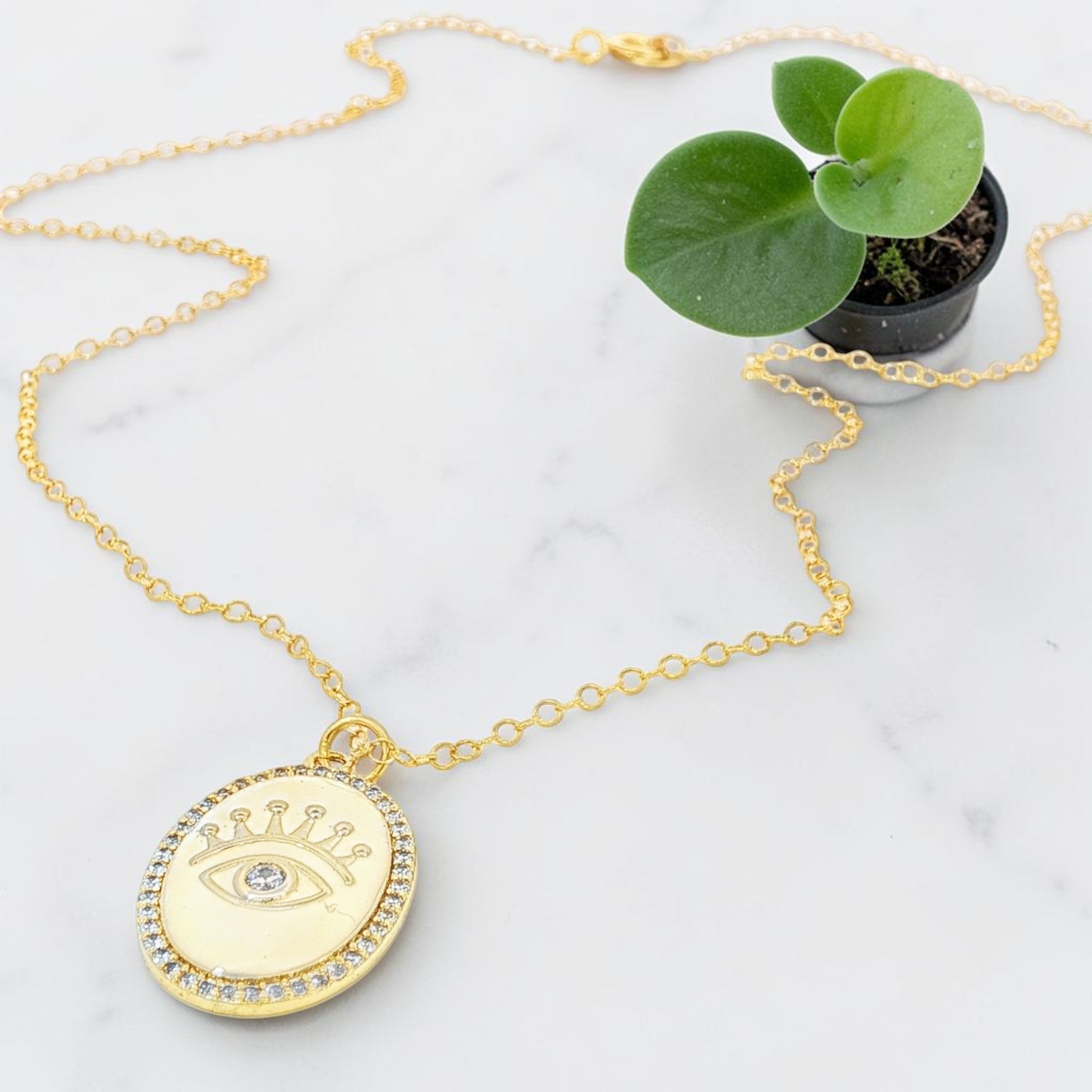
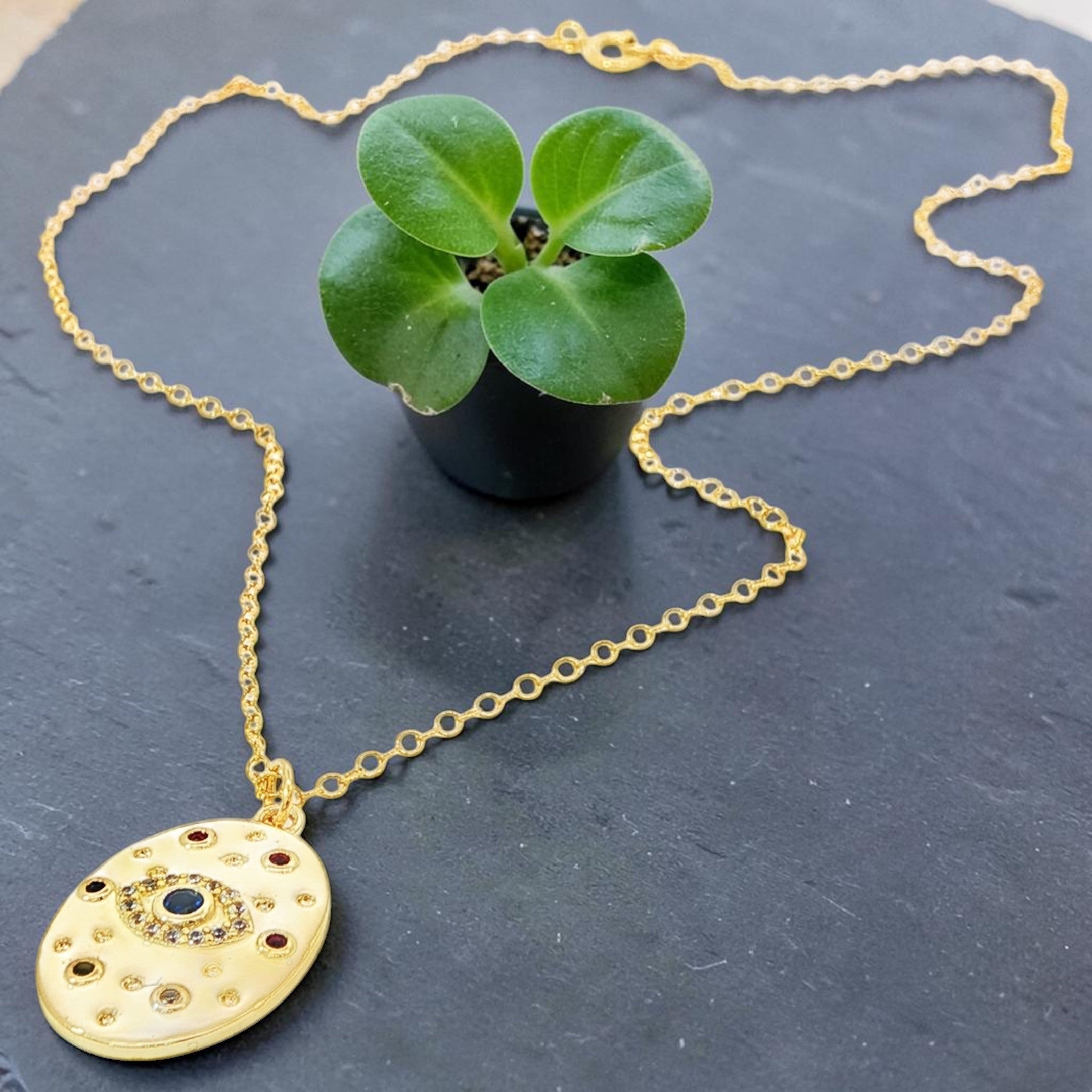
The evil eye symbol has been connected with the idea that envy or harmful attention can have negative consequences. In various traditions, protective objects featuring an eye symbol have been used as a way of guarding against that perceived influence.
When the symbol appears on a necklace, those traditional associations become part of a piece of jewelry that can be worn every day. The necklace may therefore symbolize several things at once.
Protection is probably the most familiar association with the evil eye.
In traditions where the evil eye is believed to be a form of harmful attention or envy, the symbol is commonly used as a protective sign. An evil eye necklace may therefore be worn with the intention of keeping unwanted influence at a distance.
That is a cultural or spiritual belief, not a scientifically established effect. There is no scientific evidence that an evil eye necklace can physically prevent harm or block a supernatural force.
Still, symbolic protection can have real personal meaning. Wearing an object associated with protection may give someone a sense of comfort or connection to a belief that matters to them.
The evil eye is also commonly associated with good fortune in modern jewelry and popular interpretations.
This does not mean that the necklace is proven to cause good luck. Rather, the symbol can represent a wish for positive outcomes, safety, or favorable circumstances.
For someone beginning a new job, moving to another city, traveling, or starting a new chapter, an evil eye necklace might serve as a small personal reminder of that hope.
Another important part of evil eye symbolism is the idea of being protected from envy or harmful attention.
The traditional belief is not simply about bad luck appearing randomly. It is often connected to the concern that jealousy, admiration, or ill intention directed toward a person could have negative consequences.
An evil eye necklace can symbolically represent awareness of that idea. For some people, wearing it is a way of carrying a protective reminder with them rather than treating the necklace as ordinary decoration.
Symbols can also take on a personal meaning that goes beyond their historical background.
Someone may wear an evil eye necklace as a reminder to focus on positive intentions, maintain perspective, or stay grounded during a stressful period. In that sense, the necklace becomes meaningful because of the thought attached to it.
The symbol does not have to represent a specific supernatural belief. It can simply stand for the intention the wearer associates with it.
Personal interpretation matters.
Two people can own identical evil eye necklaces and attach completely different meanings to them. One might connect the symbol to family traditions. Another might see it as a reminder of a meaningful trip. Someone else may simply like the design.
That is one reason there is no single answer to the question, "What does an evil eye necklace mean?" Traditional symbolism provides context, but the wearer ultimately determines much of the personal meaning.
There is a practical reason necklaces can feel particularly meaningful as symbolic jewelry: they are easy to wear throughout the day.
An evil eye necklace can become part of someone's everyday routine without requiring a specific occasion. It can be worn with a T-shirt, work outfit, dress, or other jewelry while keeping the symbol close at hand.
Some people choose a necklace specifically because they want a subtle protective symbol that does not feel overly formal. Others want to carry a cultural or personal symbol in a way that fits naturally into everyday life.
A necklace may also be chosen because it was given by someone important. In that situation, the meaning can come partly from the relationship between the giver and recipient.
There is no evidence that wearing an evil eye symbol in one particular physical location gives it greater supernatural power. Claims about placement should therefore be understood as traditional or personal beliefs, not established facts.
For many wearers, the value is simpler. The necklace represents something they want to remember.
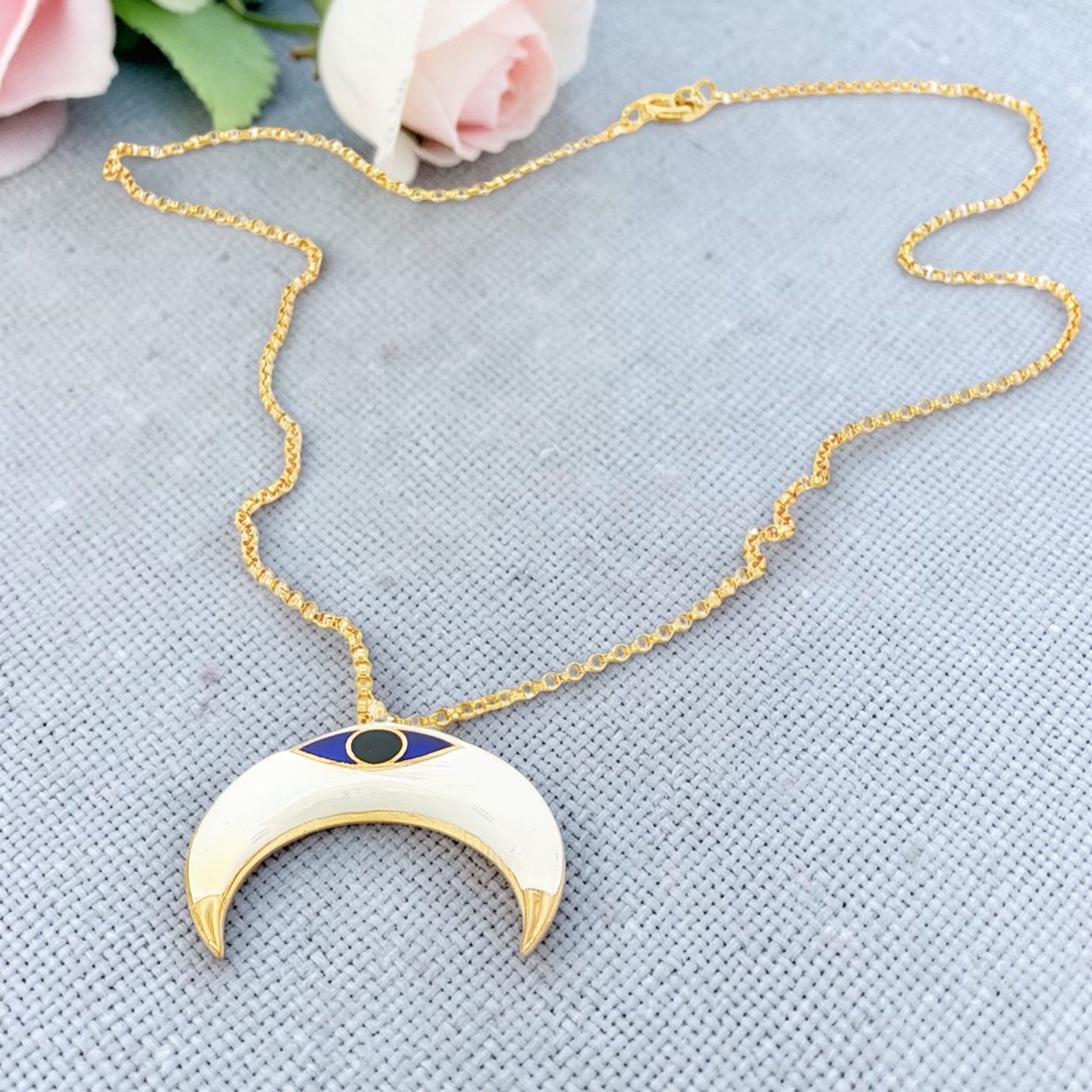
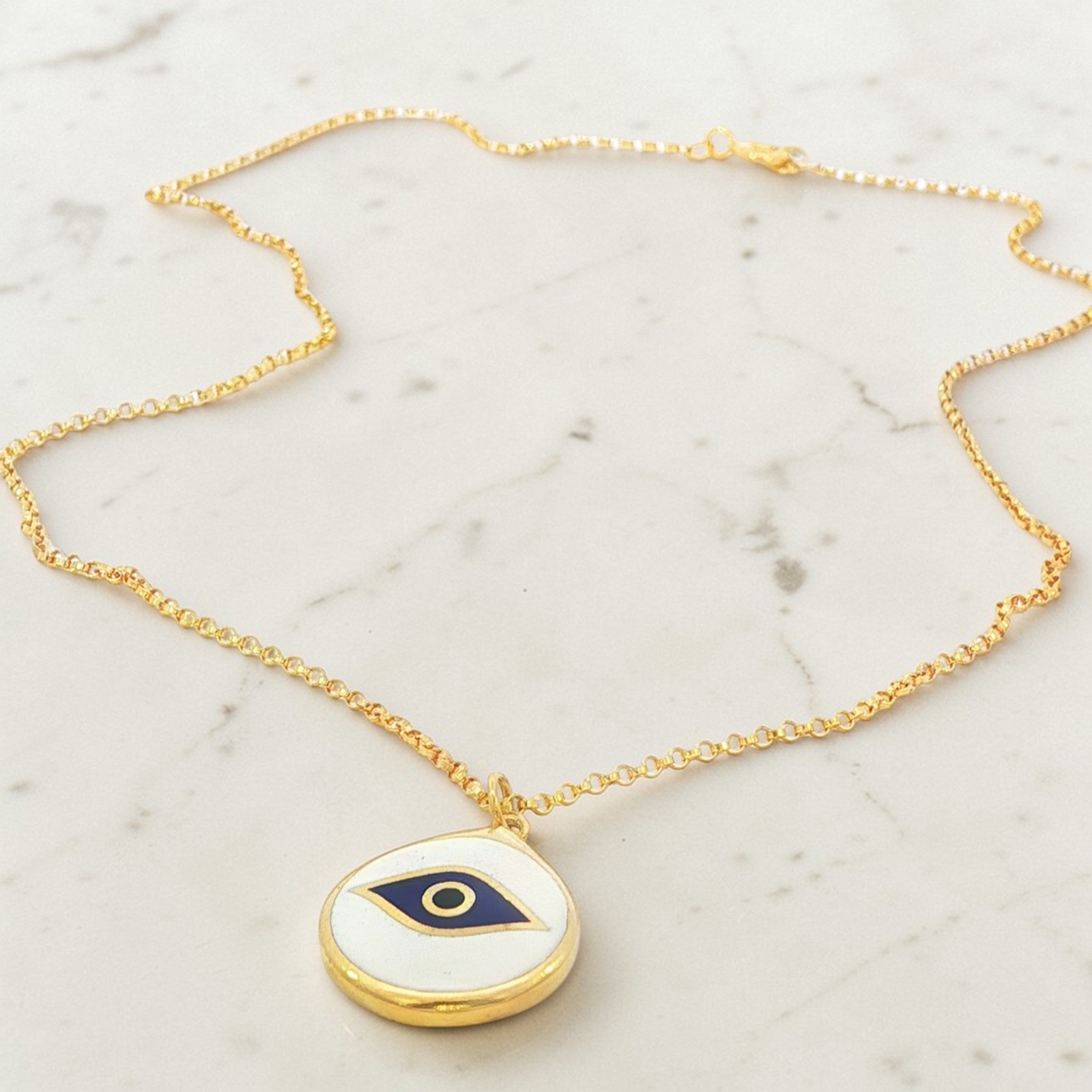
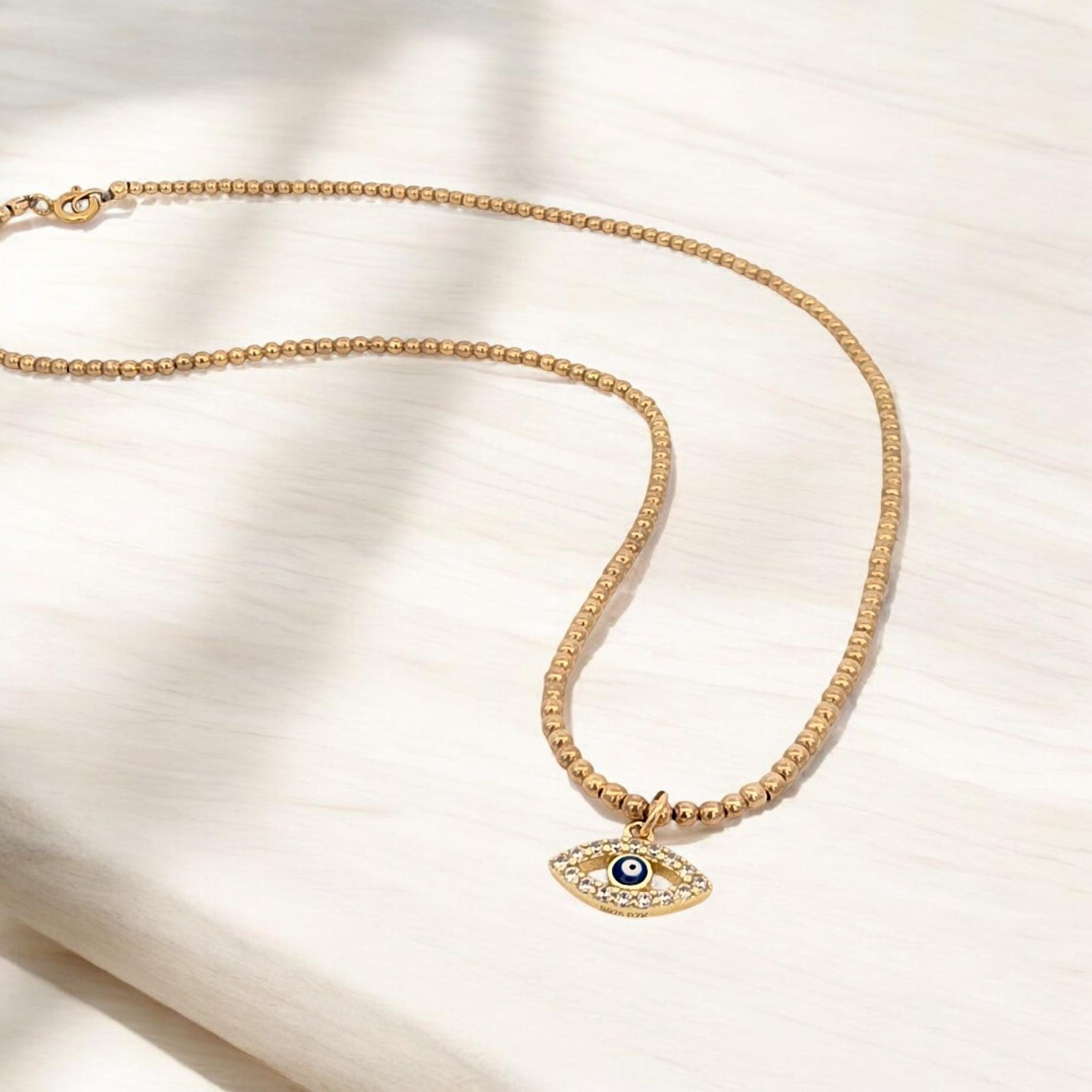
This question deserves a clear distinction between cultural belief and scientific evidence.
In several traditions, the evil eye symbol is regarded as protective. People may wear an evil eye pendant or necklace with the belief that it helps guard against envy, ill will, misfortune, or negative attention.
Science does not establish that an evil eye necklace physically blocks negative energy, prevents misfortune, or guarantees protection. There is no reliable scientific basis for treating the necklace as a physical shield against supernatural harm.
That does not make the symbol meaningless.
Cultural symbols can carry emotional and personal significance even when their traditional protective function cannot be scientifically demonstrated. A person may wear an evil eye necklace because it reminds them of family, cultural heritage, a loved one, personal faith, a fresh start, or a period of change.
The distinction matters because respecting a tradition does not require presenting its spiritual claims as scientific facts.
Blue is strongly associated with the traditional nazar form of the evil eye and is one of the most recognizable versions of the symbol.
A blue evil eye necklace is commonly connected with protection, good fortune, peace, and traditional evil eye symbolism. The familiar blue and white eye design is especially recognizable in jewelry inspired by Turkish and broader Mediterranean traditions.
However, blue does not have one fixed meaning everywhere.
Modern jewelry designs often use color in ways that reflect contemporary preferences as much as historical tradition. A blue evil eye necklace might therefore carry traditional protective associations for one person while simply representing calm, familiarity, or a favorite color for another.
The safest way to understand the symbolism is to treat blue as a common association rather than a universal rule.
Color can add another layer of interpretation to an evil eye necklace, but color meanings are not universal rules.
Different jewelry traditions and modern interpretations may associate colors with different qualities. These associations can vary considerably.
Blue: Often associated with traditional evil eye symbolism, protection, peace, and good fortune.
Pink: Sometimes connected with love, friendship, affection, or emotional warmth in modern interpretations.
Red: Often associated with strength, courage, energy, or confidence in contemporary symbolic jewelry.
Green: May be connected with growth, renewal, balance, or positive change.
White: Can suggest peace, clarity, simplicity, or positive intentions.
Black: May be interpreted as strength, resilience, grounding, or protection in some modern designs.
These meanings should not be treated as an ancient, universal color system. Cultural traditions differ, and jewelry designers may also give their own interpretations to color.
If a particular color feels personally meaningful, that connection can be just as relevant to the wearer as a traditional association.
An evil eye pendant is the central symbolic element of an evil eye necklace.
The word "pendant" refers to the decorative or symbolic piece suspended from the chain, while "necklace" describes the complete jewelry item. In an evil eye necklace, the pendant is usually where the eye symbol is most clearly represented.
An evil eye pendant can therefore function as a protective symbol, personal talisman, meaningful accessory, or gift with symbolic intent.
The meaning does not necessarily change because the symbol is a pendant. Rather, the pendant gives the symbol a visible and wearable form.
A small pendant may feel understated and personal. A larger pendant can make the symbol more noticeable. Neither is inherently more meaningful. The choice depends on the wearer and the purpose behind the necklace.
It is difficult to make assumptions about someone simply because they wear an evil eye necklace.
The same design can mean very different things to different people.
Someone may wear one because the symbol is familiar from their cultural background. Another person may have received it from a parent, friend, or partner. Someone else may see it as a personal reminder of protection or positivity. Another wearer may simply appreciate the eye design and its visual character.
So an evil eye necklace does not automatically indicate that someone is spiritual, religious, superstitious, or connected to a particular culture.
The reason behind the jewelry matters more than the symbol alone.
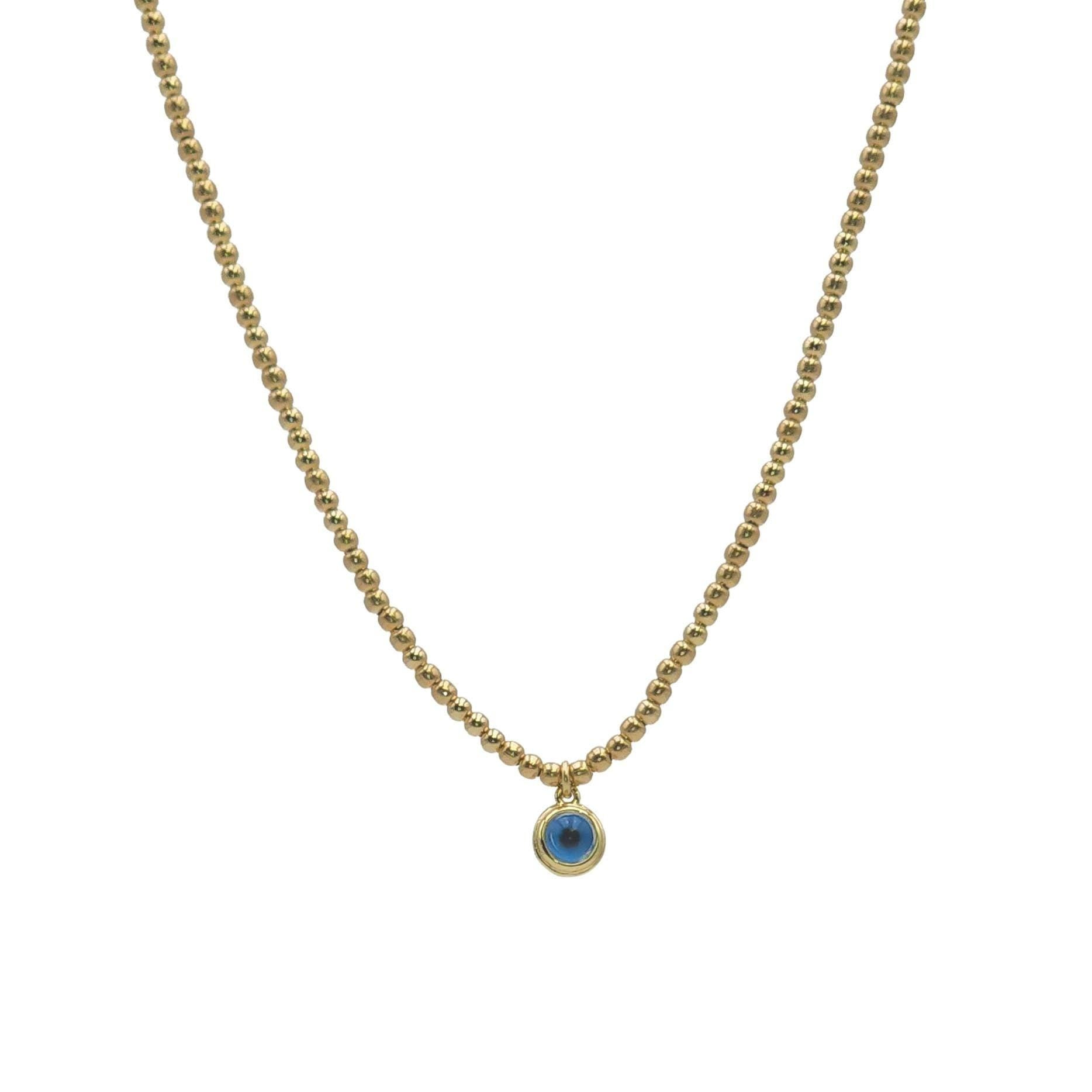
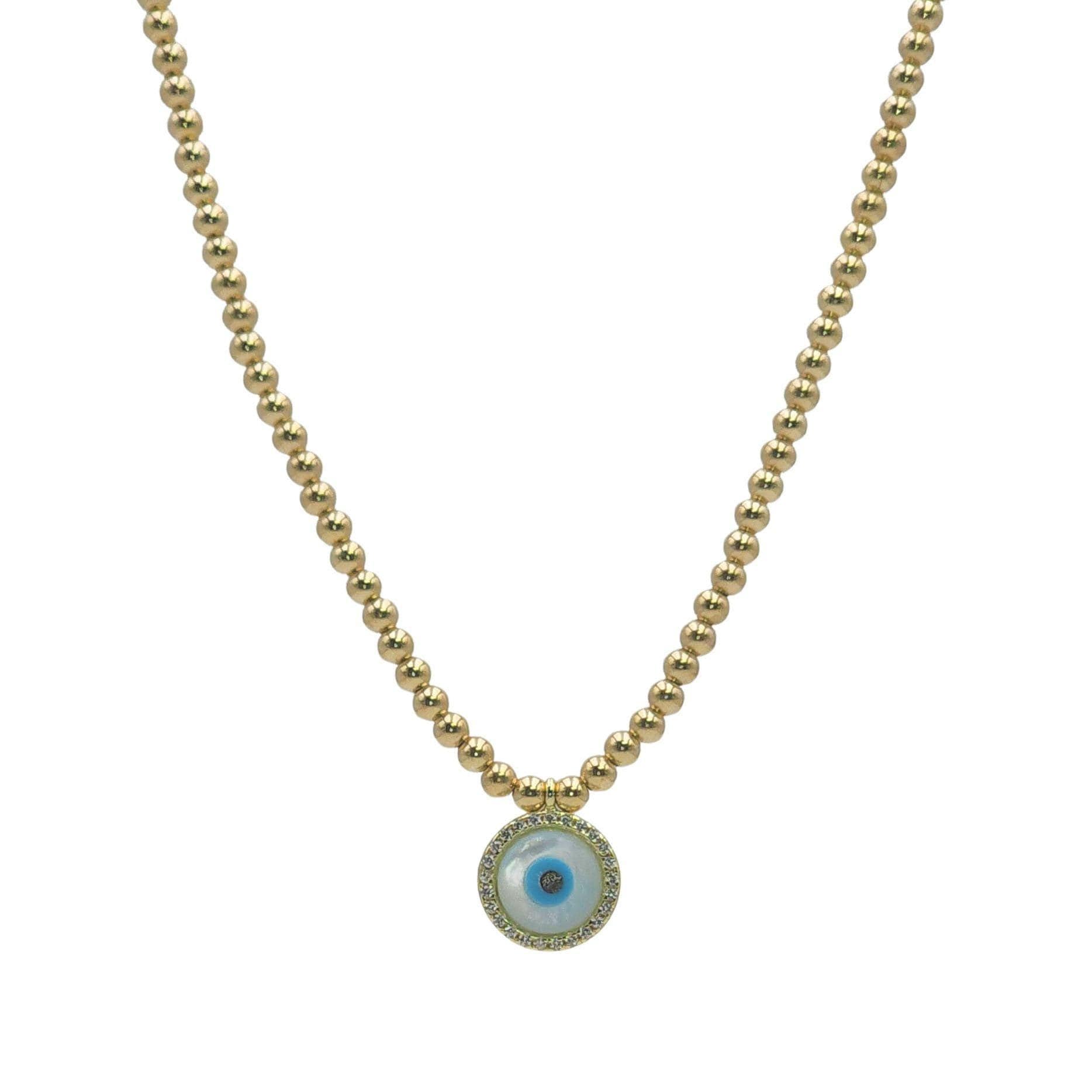
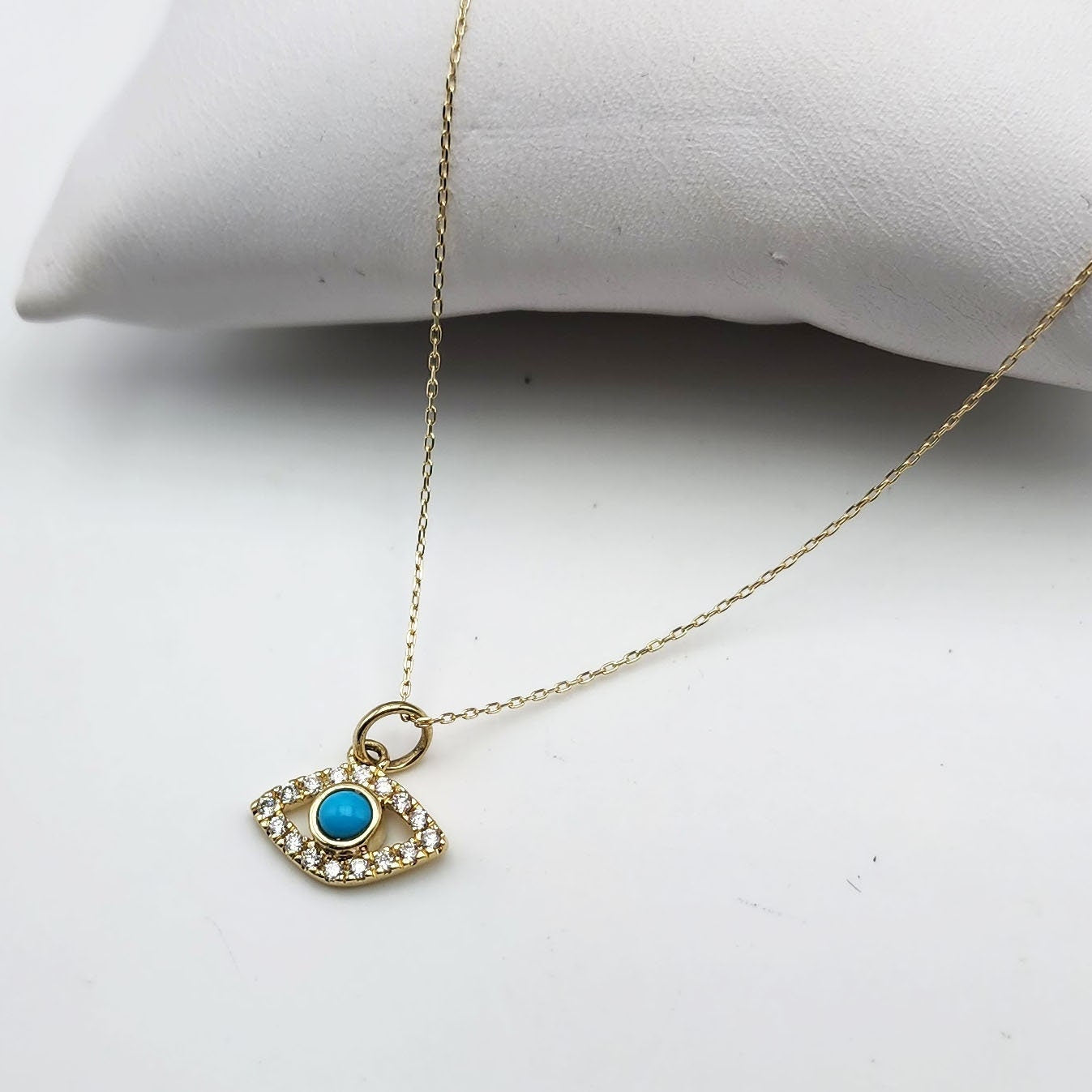
An evil eye necklace can carry a thoughtful message when given as a gift.
Because the symbol is traditionally associated with protection and positive intentions, a giver may choose it to express a wish for someone's safety, good fortune, or well-being.
The meaning can be especially appropriate around personal milestones. Birthdays, graduations, new jobs, moves to a new city, travel, new beginnings, and meaningful friendship moments can all give a symbolic necklace additional significance.
For example, giving an evil eye necklace to someone starting a new job could represent a simple wish that they stay safe and have good experiences in the next stage of their life.
The exact meaning still depends on the relationship.
A close friend might give the necklace as a reminder of their friendship. A family member might connect it with a shared cultural tradition. A partner might choose it as a personal gesture of care.
An evil eye necklace gift does not have one fixed message. The story behind the gift often matters more than the symbol itself.
There is no blanket rule that wearing an evil eye necklace is inherently disrespectful.
The symbol has cultural and historical significance across multiple traditions, so it is worth recognizing that it is not simply a modern fashion motif. People have understood and used related evil eye symbols in different ways across different communities.
At the same time, cultural symbols deserve some thought when they are used outside the context in which they developed.
A person considering an evil eye necklace can think about why they are wearing it, what the symbol means to them, and whether they are treating its cultural significance respectfully rather than reducing it to a meaningless trend.
Interpretation can also differ between communities. What feels like a familiar cultural symbol to one person may have a different significance to another.
Context and intention matter.
The phrases may sound almost identical, but the search intent is slightly different.
"Evil eye jewelry meaning" can refer to bracelets, rings, earrings, pendants, charms, necklaces, or other pieces featuring the symbol. It is a broad question about the symbolism of evil eye jewelry.
"Evil eye necklace meaning" is more specific. It asks what the symbol means when it is worn as a necklace and why someone might choose that particular form.
That distinction matters because a necklace can become a personal everyday symbol. It may be worn frequently, given as a gift, or selected specifically because the wearer wants a visible but relatively subtle piece of symbolic jewelry.
The traditional meaning of the eye does not necessarily change because it is on a necklace. What changes is how the wearer incorporates that symbolism into daily life.
Choosing an evil eye necklace does not have to be based entirely on symbolism. Personal preference still matters.
Start with the version of the symbol that feels most natural to you. Some people prefer a traditional blue eye, while others are drawn to a simpler or more contemporary interpretation.
The pendant size can also affect how the necklace feels. A small evil eye pendant may work well for someone who wants understated symbolism. A larger design makes the symbol more visible.
Chain length is another practical consideration. A shorter chain can keep the pendant closer to the collarbone, while a longer chain may create a more relaxed look.
Metal matters too. Gold, gold-filled, silver-toned, and other finishes can give the same symbol a very different appearance.
Most importantly, consider your connection to the necklace. If it is a gift, think about the message behind it. If you are buying it for yourself, consider what you want the symbol to represent.
A meaningful necklace does not need a complicated explanation.
An evil eye necklace can be worn on its own when you want the symbol to remain the main detail. This keeps the design simple and makes the pendant easy to notice.
It can also be layered with simple chains. If you do this, keeping the other pieces relatively understated can help the evil eye pendant remain visually distinct.
For everyday outfits, the necklace can work with casual clothing as easily as with a more polished look. Choosing a neckline where the pendant remains visible is useful if the symbolism is part of why you chose the necklace.
There is no required way to wear it. The most meaningful choice is usually the one that feels comfortable and appropriate for the wearer.
The meaning of an evil eye necklace goes beyond a simple definition.
Traditionally, the symbol is associated with protection from envy, ill will, misfortune, or negative attention. For some people, that symbolism remains closely connected to cultural or spiritual beliefs. For others, the necklace represents good fortune, positive intentions, family, personal memories, or a meaningful gift.
There is also room for a simpler interpretation. Someone may wear an evil eye necklace because they like the symbol and the way it looks.
None of these interpretations has to cancel out the others.
The most useful way to understand evil eye necklace meaning is to separate traditional symbolism from personal meaning. The cultural history gives the symbol its background, while the wearer gives the necklace its individual significance.
For one person, it may represent protection. For another, it may be a reminder of someone they love. For someone else, it may simply be a beautiful piece of jewelry with a long and recognizable history.
That flexibility is part of what makes the evil eye necklace such a lasting symbol.
An evil eye necklace is traditionally associated with protection from envy, ill will, misfortune, or negative attention in various cultural traditions. For modern wearers, it may also represent good fortune, positive intentions, cultural connection, or a personal reminder.
The meaning behind an evil eye necklace varies. Its traditional symbolism is often connected with protection, while individual wearers may associate it with family, faith, personal experiences, positivity, or meaningful relationships.
It commonly symbolizes protection and is sometimes associated with good fortune and guarding against negative attention. These are traditional or cultural interpretations, not scientifically proven effects.
In some cultural and spiritual traditions, the evil eye is regarded as a protective symbol. However, there is no scientific evidence that an evil eye necklace physically blocks negative energy, prevents misfortune, or provides supernatural protection.
Blue is strongly associated with the traditional nazar and is commonly linked with protection, peace, good fortune, and familiar evil eye symbolism. Color meanings can vary between traditions and modern interpretations.
There is no universal rule that says wearing an evil eye necklace is inherently inappropriate. Because the symbol has cultural significance, it is sensible to understand its background and treat it respectfully. Personal and cultural perspectives can differ.
As a gift, an evil eye necklace can communicate a wish for protection, good fortune, care, or positive intentions. The precise meaning depends on the relationship between the giver and recipient and the reason for giving it.
An evil eye pendant commonly represents the same traditional symbolism associated with the evil eye, particularly protection from envy or harmful attention. It can also serve as a personal reminder or meaningful accessory.
The evil eye belief appears in multiple cultural and religious contexts, and related beliefs are not exclusive to one religion. The symbol has been interpreted differently across communities, so it should not automatically be treated as belonging solely to a particular faith.
Share

Share information about your brand with your customers. Describe a product, make announcements, or welcome customers to your store.