Flash Sale 70% Off
Give customers details about the banner image(s) or content on the template.
Write your store's popup content

Shopping for gold jewelry can get confusing fast. Two terms appear almost everywhere gold filled and solid gold and while they often look nearly identical, they perform very differently over time. The difference isn't just about price. It affects durability, tarnish resistance, lifespan, long-term value and how well your jewelry holds up to everyday wear.
If you're wondering whether gold filled is "real gold," how it compares to 14k solid gold, or whether it's worth paying more for solid gold, you're in the right place. Understanding these differences before you buy can help you avoid overspending or choosing jewelry that doesn't match your lifestyle.
In this guide, we'll explain exactly what separates gold filled vs solid gold, how each type is made, how they compare to gold plated and gold vermeil jewelry and which option offers the best value depending on your budget, style and how often you plan to wear it.

Brass sits underneath most gold filled pieces. A thick layer of real gold gets bonded onto that brass using heat and serious pressure and that's a completely different process from gold plating, where the gold layer is almost paper thin and applied through electroplating instead. US law actually sets a minimum here: gold filled jewelry needs at least 5% gold by weight and that layer has to be mechanically bonded, not just coated over the top.
That bonding is the whole reason gold filled holds up. Nothing about it is sitting loosely on the surface waiting to rub off after a few weeks. It's fused into the piece, which is why it resists peeling and flaking through normal use.
Also Read: Gold Filled vs Gold Plated Jewelry: What's the Difference?
People hear "gold filled" and assume it means gold packed on the inside. Backwards, actually. The gold sits on the outside, mechanically pressed and bonded around a base metal core. A gold sandwich, more or less, gold as the bread, something cheaper as the filling.
Solid gold, by comparison, has no such filling. Gold filled does. The core underneath is brass or another alloy and the outer shell is genuine gold, thick enough to survive years of actual wear if you don't abuse it.
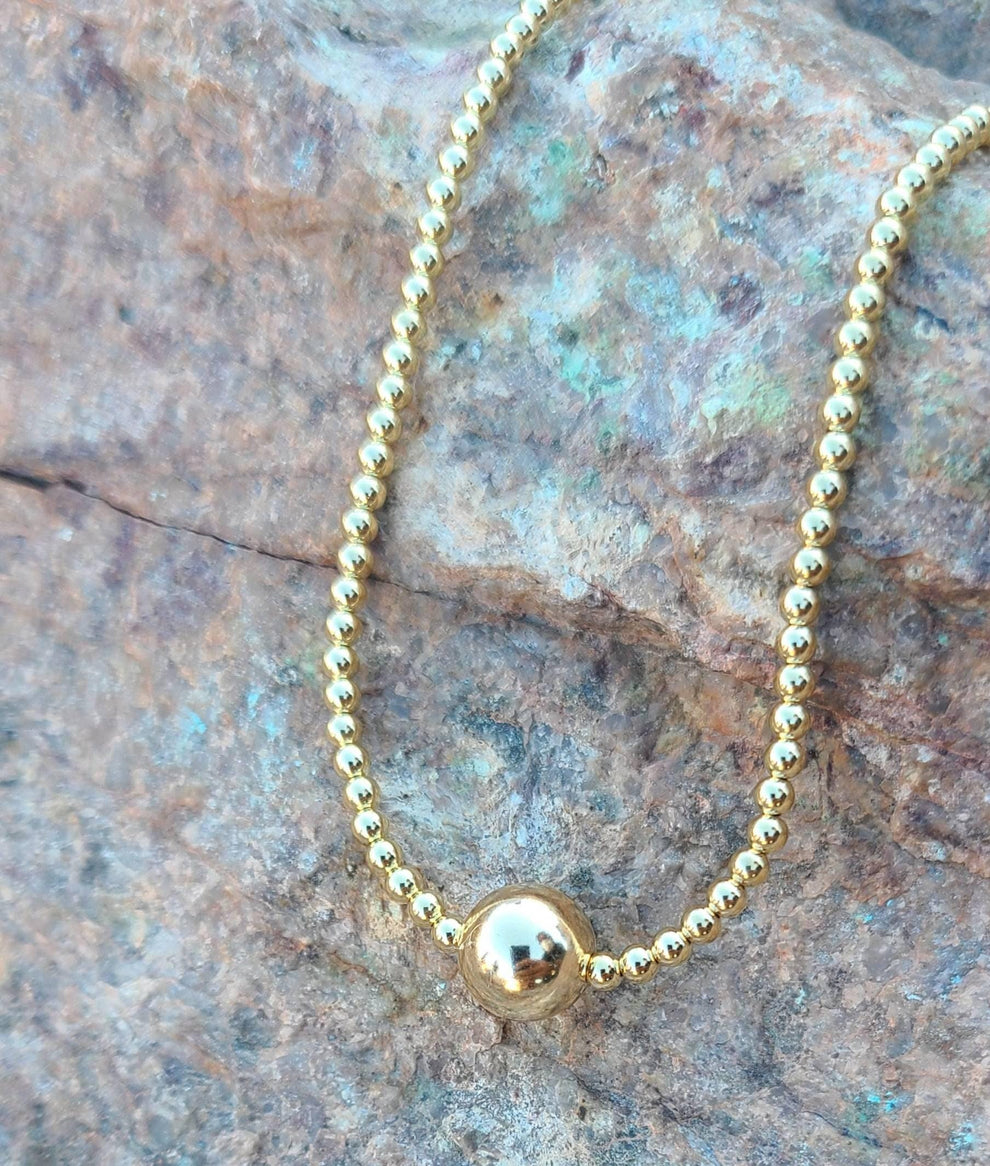
Start with a base metal, brass usually, shaped into a rod or a flat sheet. Then layers of real gold get heated and pressed onto that base under extreme pressure. That pressure creates a genuine molecular bond between the two metals, nothing like electroplating, where gold ions just get deposited onto a surface through an electric current, leaving a coating that's both thinner and far weaker.
This bonding method means the piece can be polished, reshaped, worn every day, all without the gold wearing thin the way plated jewelry inevitably does.
Yes. Full stop. Ask around and this question comes up more than almost anything else on the topic. The outer layer is genuine gold, not a gold colored substitute standing in for the real thing. The difference from solid gold isn't about authenticity. It's about what's underneath, a different metal instead of more gold.
So gold filled lands in a middle zone. Not fake like cheap costume pieces, not solid gold either.
"14k gold filled" on a listing tells you the gold layer bonded to the base metal is 14 karat, 58.3% pure gold mixed with other metals for strength. The karat number describes that outer layer's purity. The word "filled" tells you it's sitting on top of something that isn't gold at all.
Worth saying plainly since it trips people up: 14k gold filled has real 14 karat gold on the outside. Brass, typically, underneath.
No layering here. No core hiding underneath a shell. Solid gold jewelry is gold, alloyed to a specific karat, from the outer edge straight through to the center. Cut a solid gold ring in half and both halves look identical, chemically speaking.
It's the oldest form of gold jewelry, the most traditional and priced according to how much actual gold went into making it.
Pure 24 karat gold is where it starts and pure gold on its own is far too soft for daily wear. Jewelers alloy it with copper, silver, or zinc, building strength while hitting a target karat purity.
That alloy gets melted, poured into molds or drawn into wire, then worked into the finished piece. Since the entire object is gold alloy rather than a coating over something else, solid gold eats up considerably more raw gold than gold filled or plated jewelry ever would.
Karats measure purity. 24 karat is pure gold, full stop and pure gold is too soft for jewelry people actually wear. Alloying fixes that. Here's the rundown:
Every gram of a 14k solid gold piece, surface and interior both, carries 58.3% pure gold. No base metal tucked away anywhere. That's exactly why solid gold gets priced by weight against current gold market rates, not by design or brand alone.
|
Feature |
Gold Filled |
Solid Gold |
|
Gold content |
Outer layer only, minimum 5% by weight |
Gold throughout the entire piece |
|
Core material |
Brass or base metal |
None, all gold alloy |
|
Durability |
High, resists peeling and flaking |
High, but softer karats scratch easier |
|
Price |
Affordable |
Significantly higher |
|
Tarnish resistance |
Very good with proper care |
Excellent, doesn't tarnish |
|
Best for |
Everyday wear on a budget |
Long term investment pieces |
Gold filled tends to win here and the reasoning isn't complicated. Showers, light workouts, constant contact with skin and clothing, it handles all of that reasonably well, at a fraction of what solid gold costs.
Solid gold will genuinely outlast you, no argument there. But the price tag pushes most people toward saving it for special occasions rather than wearing it without thinking on a random Tuesday.
If money truly isn't the deciding factor and you want something that keeps its gold content decades from now no matter what, solid gold wins outright.
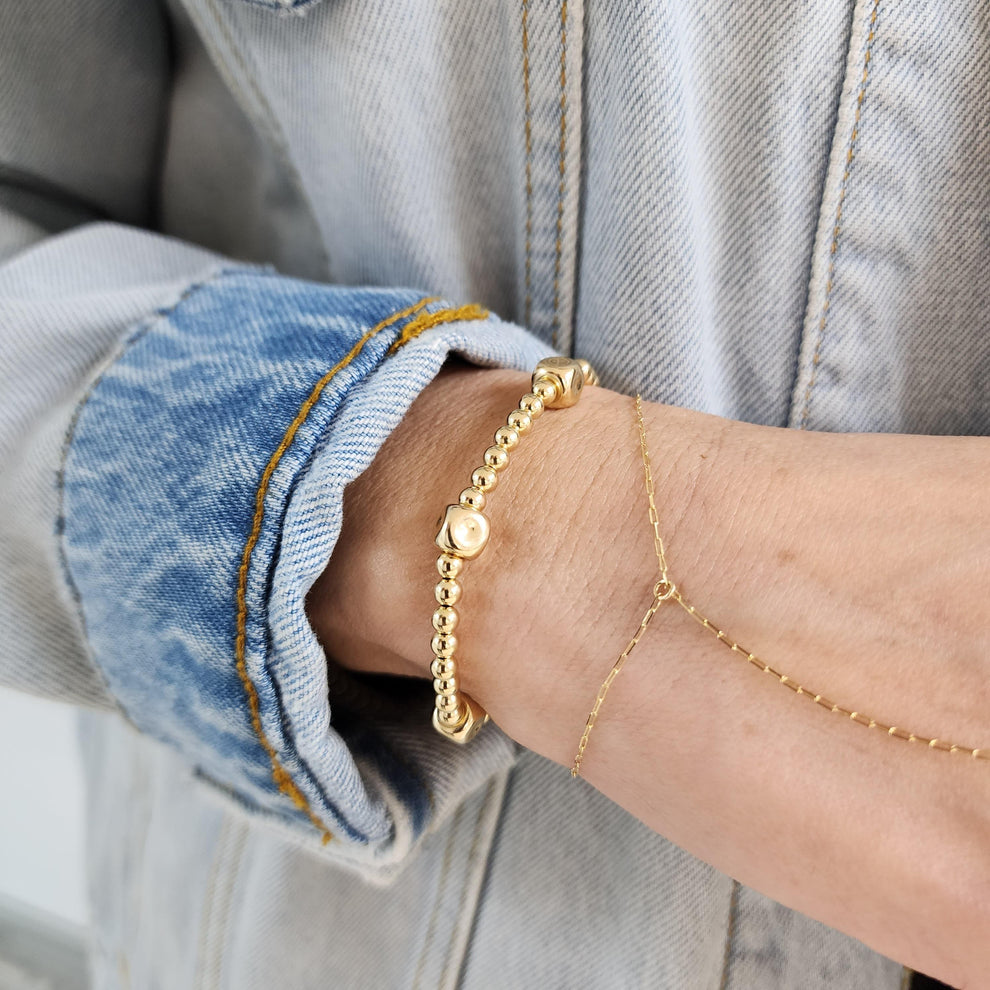
This search usually means one specific thing: gold filled versus solid 14k gold, since 14k shows up constantly in both camps. Same underlying difference as before. Gold filled has a 14k layer bonded over a base metal. Solid 14k gold carries that same purity from the surface down to the core.
Want affordability with a genuinely realistic gold look and feel? Gold filled 14k delivers that. Want something that holds gold value even if it eventually gets melted down? Solid 14k gold is the better call.
Short version: not much, if it's made well. Quality gold filled jewelry, with a proper gold layer thickness, resists tarnishing for years without much visible change.
It's not bulletproof, though. Solid gold simply doesn't tarnish, period. Gold filled can, eventually, if you're constantly exposing it to harsh chemicals, chlorine, or certain lotions without a break. Basic care goes a long way here.
Depends almost entirely on two things: how thick that gold layer is and how you treat the piece day to day. Quality gold filled, built to that 5% by weight minimum, typically runs 10 to 30 years. Some pieces go longer if they're spared constant friction or harsh chemical exposure.
What cuts that lifespan short? Frequent chlorine, perfume applied directly onto the metal, abrasive cleaners and jewelry rubbing against jewelry constantly.
Given how many gold colored options flood the market, this is a fair thing to ask. Generally, yes, especially set against gold plated jewelry. The gold layer is thicker, the durability is better, the lifespan is longer and none of that comes with the solid gold price tag attached.
If real gold's look and feel matters to you but an investment level price doesn't fit your budget, gold filled is genuinely one of the better options out there right now.
The price reflects the gold, plain and simple. A lot more of it, running through the entire piece rather than sitting as a surface layer. That's what makes it a real investment. Value tied to current gold prices, something gold filled and plated jewelry simply can't offer in the same way.
Think of jewelry as an asset as much as an accessory? Solid gold earns its price tag. Just want something that looks great for years without the investment angle? Gold filled will likely cover that just fine.
Not remotely and mixing these two up is common. Both terms describe gold sitting over another metal, which is exactly where the confusion starts. What actually separates them is thickness and how that gold gets attached.
Electroplating creates gold plated jewelry, a process depositing a razor thin gold layer, sometimes just microns, using an electric current. That layer wears off fast, sometimes within a few months of regular wear.
Gold filled requires a legally mandated 5% minimum of total metal weight, mechanically bonded rather than plated. Dramatically thicker. Dramatically more durable.
Vermeil is sterling silver wearing a gold coat, at least 2.5 microns thick typically, thicker than standard plating but still nowhere close to gold filled thickness. Real gold on the surface, yes, but like plated jewelry, that layer wears thin over time, especially with regular moisture exposure.
Solid gold never loses gold content. It's gold throughout, full stop. Vermeil sits comfortably in between on price and appearance, though it can't match the longevity of gold filled or solid gold.
Probably the sharpest contrast on this whole list. Gold plated carries the thinnest layer discussed here, making it the least durable for daily wear. Fine for occasional pieces or trends you won't keep around for years.
Solid gold won't fade. Won't peel. Won't lose color, regardless of how long you've owned the piece or how hard you've worn it.
Which one fits depends on budget, how often you'll actually wear it and whether you're after an investment piece or a solid everyday accessory.
Gold filled, most of the time. It balances affordability and durability well enough to handle daily life, light water exposure and constant skin contact without much visible wear, all while costing considerably less than solid gold.
Solid gold still takes the crown if long term value matters more to you than the upfront cost. It simply won't wear down, no matter how many years pass.
Three things decide this, really: your budget, how often you'll wear the piece and whether jewelry is purely decorative to you or also something you view as an investment.
Gold filled makes sense if you want the look of real gold, solid durability and a price that fits daily pieces, stacking rings, layered necklaces, bracelets you'll actually reach for often.
Solid gold makes sense if you want something that holds its value indefinitely, something you might pass down eventually, or you simply prefer knowing every part of the piece is genuine gold with nothing hiding underneath.
Stick to these and both gold filled and solid gold will hold their look for a long time.
Isabella Celini makes handcrafted 14k gold filled jewelry built specifically for everyday wear, pairing a genuine gold layer with waterproof, tarnish resistant construction. Each piece is meant to survive actual daily life, showers included, without giving up the classic gold look shoppers are hunting for in the first place.
Neither option is the universal right answer. Gold filled works for people who want real gold without the investment level cost, practical and affordable. Solid gold stays the standard for anyone chasing something that holds its value across generations.
Once you understand how each is made, how much actual gold sits in the piece and how they age over time, the choice gets a lot less confusing and you end up with something that actually fits how you live.
1. Is gold filled real gold?
Yes. A genuine gold layer, mechanically bonded to a base metal core, meeting a legal minimum of 5% gold content by weight.
2. Is gold filled better than solid gold?
Depends on what you're optimizing for. Gold filled wins on affordability and everyday durability. Solid gold wins on permanent gold content and long term value.
3. Does gold filled jewelry tarnish?
Quality gold filled resists tarnishing well with basic care, though it's not entirely immune the way solid gold is across many years.
4. How long does gold filled jewelry last?
Usually 10 to 30 years with proper care, depending on the gold layer's thickness and how well it's maintained.
5. Can you wear gold filled jewelry every day?
Yes. That's exactly what it's built for, light water exposure and regular skin contact included.
6. Can you shower with gold filled jewelry?
Occasional water exposure is fine for most pieces. Prolonged contact with chlorinated water or harsh soaps will shorten its life, so avoid that where you can.
7. Is 14k gold filled the same as 14k solid gold?
No. 14k gold filled has that karat layer bonded over a base metal core. 14k solid gold carries that same purity all the way through.
8. Is gold filled jewelry worth it?
Yes, particularly against gold plated jewelry, since gold filled offers a much thicker, longer lasting gold layer without the solid gold price tag.
9. What type of gold jewelry is best for everyday wear?
Gold filled, generally. It balances durability, affordability and a genuine gold look better than the alternatives for daily use.
Share

Share information about your brand with your customers. Describe a product, make announcements, or welcome customers to your store.