Flash Sale 70% Off
Give customers details about the banner image(s) or content on the template.
Write your store's popup content

Buy the wrong necklace length and it shows fast. A chain that's too short digs in or gets lost against your neckline. One that's too long slides under your collar and disappears, or hangs lower than you meant it to.
None of this is guesswork, though. Once you know where each length sits on the body, how to measure yourself, and how length interacts with your neckline, pendant size, proportions, and the occasion, picking the right one gets a lot easier.
This necklace length guide covers standard necklace sizes, how to measure necklace length at home, which lengths suit different necklines, how layering works, and what to wear for everyday, work, travel, and formal settings.
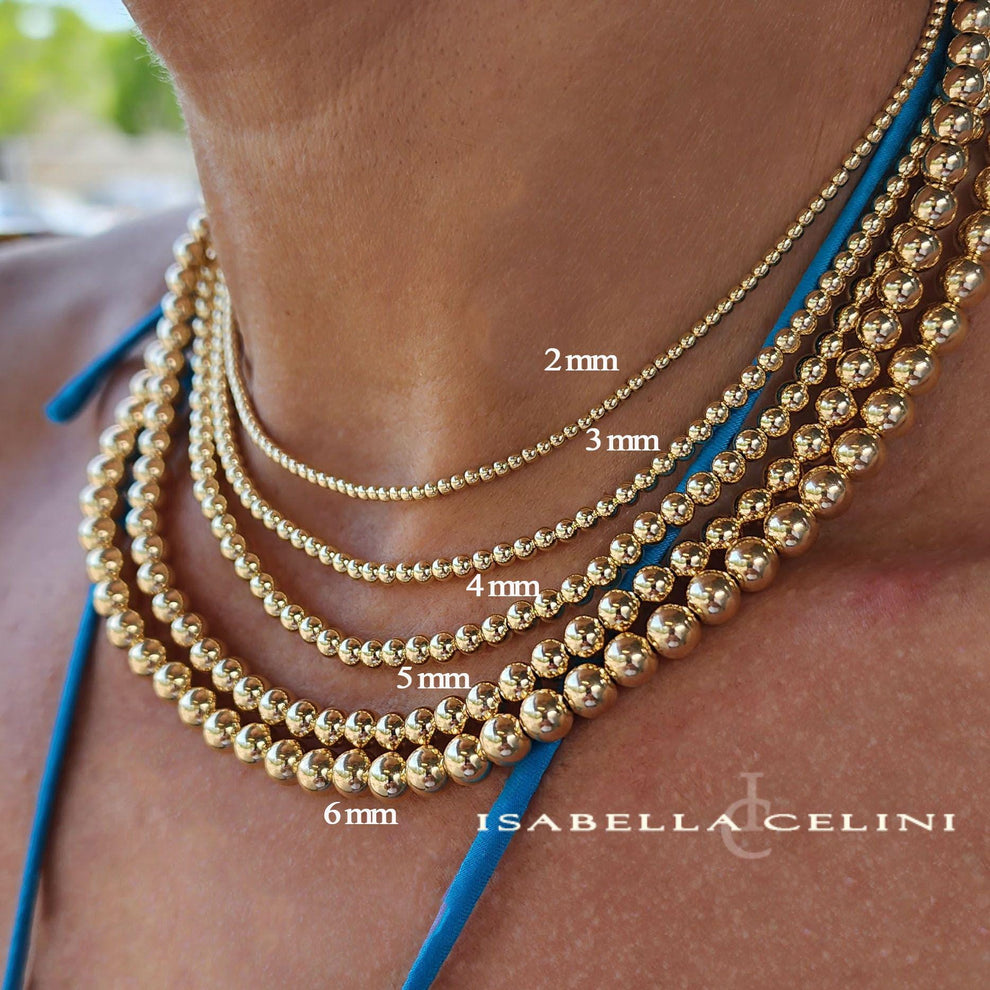
For a first everyday necklace, 17–19 inches is the practical pick. Shopping for a specific outfit instead? Let the neckline decide before height does.
|
Necklace Type |
Length |
Approximate Position |
Best For |
|
Choker |
14–16" |
Base of neck |
Open necklines, close-fitting styles |
|
Princess |
17–19" |
Collarbone |
Everyday wear, pendants, versatile styling |
|
Matinee |
20–24" |
Upper chest |
Blouses, blazers, lower necklines |
|
Opera |
28–36" |
Below bust |
Statement and formal styling |
|
Rope |
36"+ |
Waist or lower |
Long looks, knots, doubling and layering |
These ranges are industry categories, not exact placement rules. Neck circumference, chain construction, pendant size, and how you actually wear the piece can shift where it lands.
Necklace length decides where the chain and pendant land relative to your face, collarbone, neckline, and torso.
Shorter chains pull the eye up, toward the face. Longer ones add vertical movement and can stretch out the upper body visually. Neither is objectively better. It depends what you're going for.
A necklace also needs breathing room from your clothing to actually register. A pendant vanishes under a crew neck if it's too short. A long chain can swamp a delicate neckline. So the right length was never just "whatever fits your neck." It has to work with the outfit and how you plan to wear it.
Four factors matter most for how to choose necklace length.
Start here. Where do you actually want the necklace visible? Should the chain sit above the neckline, inside it, or over it?
Height gives you a rough starting point, but torso length usually tells you more. Two people of the same height can wear the same necklace and get different results, because their torsos and necks aren't built the same.
Minimalist wardrobe? A single delicate princess-length chain is probably all you need. Prefer statement pieces? Go longer, bigger pendant, maybe layered.
Office and everyday jewelry does better with practical, low-key lengths. Evening and formal wear can carry something longer or more dramatic.
Chokers sit close to the base of the neck, almost no drop at all. Because the chain sits right against skin, half an inch off in either direction changes how it actually feels to wear. Fit here matters more than it does for any other length on this list.
Chokers work particularly well with:
A simple crew neck works too, if you want the choker sitting above the neckline rather than inside it.
Secure, not tight. Measure your neck at the height you want the choker to sit, then add a little room for comfortable movement. Between sizes? Go longer. A too-tight choker is the single most common complaint with this length, and it's avoidable.
You should be able to move, breathe, and swallow without the chain digging in. If you can't, it's the wrong size, not the wrong necklace.
Princess length sits at or just below the collarbone, and it's the category most people end up reaching for first. An 18-inch chain in particular shows up constantly on pendant necklaces, because it keeps the pendant visible against most everyday necklines while still staying close to the face.
It pairs with crew necks, V-necks, scoop necks, button-downs, blouses, cardigans, everyday dresses, basically everything. If you only want to own one necklace, this is the length that works across the most outfits.
Matinee length drops lower than princess, sitting across the upper chest instead of the collarbone. More presence, without going all the way to opera-length drama.
Scoop necklines, square necklines, open cardigans, blazers, blouses, lower necklines in general: matinee handles all of it. It's also the length to reach for when you want a pendant sitting further down the chest instead of right at the collarbone.
Below the bust is opera territory, and yes, the silhouette is meant to be dramatic. Pearls and long strands are the traditional home for this length, though modern versions run just as often to chains, beads, and mixed materials.
Give it room. A simple dress, a solid-color top, a minimal blouse, even a plain turtleneck: all of these let an opera necklace do its job without competing for attention. Some designs double up nicely, too, turning one long strand into what reads like two shorter ones.
Past 36 inches, a necklace stops being one thing and starts being several. Worn long, doubled, tripled, knotted, or mixed in with shorter chains, a single rope necklace can cover the ground that three or four separate pieces would otherwise need to.
Full length for simplicity. Doubled, knotted, or layered with shorter chains for more visual interest. Because rope necklaces move a lot, the rest of the outfit generally needs to stay simple so the chain doesn't fight with anything else going on.
|
Feature |
Choker |
Princess |
Matinee |
|
Length |
14–16" |
17–19" |
20–24" |
|
Sits around |
Base of neck |
Collarbone |
Upper chest |
|
Style |
Close-fitting |
Adaptable |
More elongated |
|
Works well with |
Open necklines |
Most everyday necklines |
Blazers, blouses, lower necklines |
|
Everyday use |
Good |
Excellent |
Good |
|
Layering |
Excellent |
Excellent |
Excellent |
No jeweler required. A flexible measuring tape is ideal, but string or ribbon and a ruler will get you the same answer.
No necklace on hand? Do this instead:
That's it. It's the quickest way to figure out how to measure necklace length and decide between 16, 18, 20, or 22 inches before you actually buy anything.
Chokers sit close to the neck, so measure your neck circumference directly, right where you want the choker to rest. Don't assume that number and your ideal necklace length are the same thing. A chain cut to your exact neck measurement usually feels too tight. Leave a little room, and use the adjustment points on the clasp if the piece has them.
Here's a detail people miss constantly: chain length and pendant drop are two separate numbers. An 18-inch chain with a 2-inch pendant sits noticeably lower than that same 18-inch chain with nothing hanging off it.
Total visual drop = chain position + pendant length
Worth remembering especially if you're trying to land a pendant inside a V-neck, or at one exact point on the chest.
Your neckline sets the outer limit on how much room a necklace actually has.
The V shape already pulls the eye down, so a pendant sitting inside that V tends to look right. Princess to matinee, roughly 17–24 inches, usually works, though it depends on how deep the V actually runs.
Crew necks sit tight to the base of the neck. Short lengths, chokers and shorter princess styles, sit above or right at the neckline. Or go the other way: a longer pendant worn over the fabric creates contrast instead. Depends whether you want the necklace framing the neck or drawing a longer line down the chest.
More open space here, around the collarbone and upper chest, so there's more to work with. Princess and matinee both do the job well. Pendant inside the opening, or a longer chain extending below it: either reads fine.
Fabric covers the whole neck, so anything short just disappears. Opera and rope lengths, worn on top of the turtleneck, are really the only options with enough drop to actually show.
Neck and collarbone fully exposed here, which means chokers and princess lengths both have room to work. Delicate short chain for minimalist. Wider choker or a bolder pendant if you want more presence.
Square necklines are all hard lines, horizontal and vertical. A princess or matinee necklace softens that. A pendant with a curved, organic shape adds some contrast against the geometry.
18 inches is the safe starting point. Wear a pendant under an open collar, or let something longer fall over the shirt for a more relaxed look. The more buttons open, the more room a shorter pendant has to actually sit within the neckline.
Halters expose the upper chest and pull attention toward the shoulders. Princess and matinee both work, depending how high the halter sits, and this is one neckline where layering tends to look especially good.
Height plays a role, but it shouldn't be the whole decision. Torso length, neck circumference, neckline, and pendant size all carry more weight in practice.
Shorter, lighter necklaces tend to balance a petite frame, especially with a simple outfit. That's not a rule against longer pieces, though. A well-chosen long pendant can still create a nice vertical line.
Princess and matinee both work as starting points, though neckline and personal taste should still make the final call.
More vertical space to work with means longer necklaces have more room to actually do something. Matinee, opera, and rope can all build a strong, elongated line on a taller frame.
No. Check where a length actually lands on your body, and how that lands against your neckline and pendant. Torso proportions matter more than height, full stop.
Chain length and pendant size aren't separate decisions. They work together.
Initials, birthstones, symbols, charms: sentimental pieces like these are usually worn at a length where the pendant stays visible without taking over the outfit. Princess length is the practical default for most of these, though the pendant's own size still matters.
Evil eye and Hamsa necklaces work at both princess and matinee length. Depends on the pendant size, and whether you want the symbol near the collarbone or sitting lower on the chest.
Pearl and beaded necklaces can go almost any length. Shorter strands feel classic and polished. Opera-length strands are more flexible, since they can often be doubled or layered.
Amulet and charm necklaces tend to sit best at princess length. Got multiple charms, or a bigger pendant? Matinee length gives you the extra room.
17–19 inches. Long enough for most small pendants to stay visible, short enough to work with almost any neckline.
Princess length or a delicate choker, both work fine. Pick a chain that complements your blouse, blazer, or shirt instead of competing with it.
A matinee necklace adds a bit more visual impact without turning into the whole outfit. Open neckline, pendant sitting inside it: reads polished every time.
Formal clothing can carry longer necklaces, layered strands, pearls, statement pendants. Opera length pairs well with simple eveningwear. Shorter pieces suit dresses that already have detail or embellishment at the neckline.
Comfort and practicality first. Shorter, lighter necklaces are less likely to snag on luggage, clothing, or bag straps. A secure clasp and sturdy chain construction matter more the more often you actually wear the piece.
Minimalist styling usually needs one carefully chosen necklace, not several. A delicate 17–19-inch chain with a small pendant is the easiest place to start. It shouldn't disappear entirely. It should just feel like it belongs, not like it's fighting the outfit.
Statement styling gives you more room to play: an oversized pendant on a longer chain, an opera-length necklace over a plain top, a rope necklace worn long or doubled, three clearly different lengths layered together. When the necklace is the focal point, keep everything else clean so it stays balanced.
Layering only works if each chain has enough space to stay visually separate.
Starting points, not fixed rules. Chain thickness, pendant size, clasp placement, neckline depth: all of it shifts the final result.
Roughly two inches of difference between chains is a good baseline for three-layer combinations. The real goal: don't let multiple pendants land at the exact same point.
Layering looks more intentional when the chains actually look different from each other. Mix a delicate plain chain, a pendant necklace, and something with texture or more weight. Vary the thickness. Keep the metal color consistent, though. That's what ties it together.
A useful formula for three chains: one statement piece, one medium-weight supporting chain, one delicate chain. Three necklaces at the same thickness and detail level start to look busy fast. Varying the weight and texture gives each layer its own job.
|
If you want... |
Start with... |
|
A close-fitting look |
14–16" |
|
An everyday necklace |
17–19" |
|
A flexible pendant option |
18" |
|
A longer everyday look |
20–24" |
|
A statement necklace |
28–36" |
|
A long strand you can style multiple ways |
36"+ |
|
Three-layer styling |
16" + 18" + 22" |
Still not sure? Start at 18 inches and work outward from the neckline you wear most.
Know your length, and shopping gets a lot simpler. Explore Isabella Celini's collections by the look you're after:
The right necklace length comes down to more than a number on a tag. Where do you want it to sit? What neckline are you wearing it with? How big is the pendant? How much visual impact do you actually want?
For most people, 17–19 inches covers daily wear. Shorter chokers, longer matinee lengths, statement pieces: each one has its own job. Not sure where to start? Measure a necklace you already love, or use the string method to test a few lengths before you buy anything.
What Is the Most Common Necklace Length for Women?
Princess length, around 18 inches specifically, is one of the most widely worn necklace length for women options. Sits at the collarbone, works with most everyday necklines and pendant styles.
What Necklace Length Should I Wear?
Depends on your neckline and the look you want. 14–16 inches for a close-fitting choker, 17–19 inches for everyday wear, 20–24 inches for a longer upper-chest look, 28 inches or more for a statement piece.
Is a 16-Inch Necklace Too Short?
No. That falls right in the typical choker range, and it's meant to sit close to the neck. Right fit depends on your neck circumference and how much room you personally prefer.
Is an 18-Inch Necklace a Good Length?
Yes. Works with nearly any neckline, especially popular for pendants, generally lands around the collarbone. Exact placement still varies a bit by neck size and design.
What Is the Difference Between a Choker and a Princess Necklace?
A choker runs 14–16 inches and sits at the base of the neck. A princess necklace runs 17–19 inches and sits lower, around the collarbone.
What Necklace Length Is Best for a V-Neck?
Princess to matinee, roughly 17–24 inches. Pick a pendant that sits comfortably within the V instead of cutting straight across the neckline.
What Necklace Length Is Best for a Turtleneck?
Opera or rope length works best. Anything shorter just disappears under the fabric; these two lengths sit over it and create real contrast.
What Necklace Length Is Best for Layering?
Something like 16", 18", and 22" is a solid starting point for three-layer styling. Adjust spacing based on chain thickness, pendant size, and neckline.
How Do I Measure Necklace Length at Home?
Use an existing necklace, a flexible tape, or string. Existing necklace: measure end to end. String: wrap it around your neck at your preferred height, mark where it meets, then measure it flat.
Does Pendant Size Affect Necklace Length?
Yes. A large or long pendant sits lower than a small one on the exact same chain. Factor in both chain length and pendant drop before deciding.
Share

Share information about your brand with your customers. Describe a product, make announcements, or welcome customers to your store.