


Pearl Necklace Meaning: Symbolism, Gifting and Style Tips
Pearl Necklace Meaning: What Pearls Symbolize and Why They Matter
A pearl necklace can mean different things depending on who wears it. For one person it is a grandmother's strand that comes out for weddings. For another it is a single pearl on a fine chain, bought as a gift to herself after a promotion.
That range is the real pearl necklace meaning. Pearls carry a long list of traditional associations, including purity, wisdom, calm, and lasting love, but none of them is fixed. The meaning comes from the occasion, the person who gives or wears it, and the story attached to the piece.
Some searchers arrive here with an unrelated slang meaning in mind. For the jewelry question, the answer is simpler and a lot more interesting.
What Does a Pearl Necklace Symbolize?
If you are asking what does pearl necklace mean in the traditional sense, the answers cluster around a handful of ideas.
Purity and innocence come up most often. In many Western traditions, the white of a pearl has been linked with purity, which is also why pearls have a long history at weddings. That is a cultural association, not a statement about the person wearing them.
Wisdom and maturity form the second thread. A pearl is not mined or cut. It grows slowly inside a living mollusk, layer by layer, and that slow formation is often used as a metaphor for experience and patience. It is why pearls are so often given to mark a milestone rather than a beginning.
Calm and balance are more of a modern, symbolic reading. Pearls have a soft glow rather than a sharp sparkle, and many people describe them as grounding. There is no evidence that a pearl changes mood, so this is best read as personal feeling, not effect.
Love and commitment round things out. Pearls have been given to brides for generations, and they remain the traditional gift for a 30th wedding anniversary. That tradition gives a pearl necklace a romantic reading when it comes from a partner, though not automatically.
Lunar symbolism shows up in several traditions too. The round, pale shape has often been compared to the moon, and the water connection reinforces it.
Taken together, these ideas explain why pearl symbolism feels so layered. But a wearer who simply likes how pearls look is not doing it wrong.
Why Are Pearls Associated With Elegance and Femininity?
Part of the answer is history. For thousands of years, natural pearls were rare and expensive, which made them a mark of status. Royalty and the wealthy wore them, and that included men. Pearl ropes on kings were once a common sight. The association with women's jewelry grew more strongly in later centuries, once pearl strands became a standard part of women's dress.
Fashion did the rest. The classic strand worn by women through the twentieth century, whether at formal events or with a plain blouse, cemented the image of pearls as polished and a little traditional.
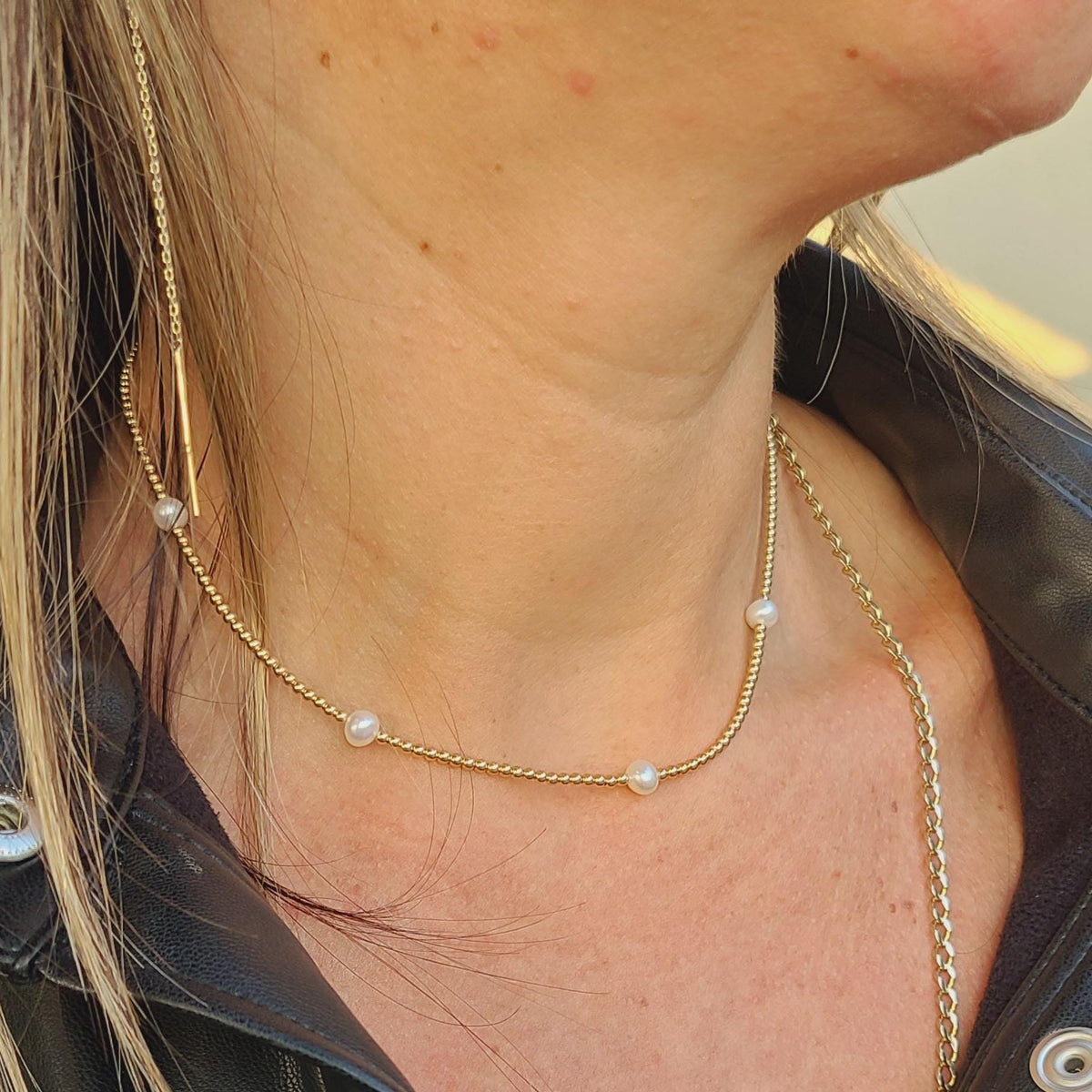
More recently, that image has loosened. Pearls now appear on minimalist chains, as single pendants, on knotted cords, and layered with gold. The same pearl can look formal or relaxed depending on what surrounds it.
So the meaning of wearing pearls for women is less about femininity as a rule and more about a shared visual vocabulary. Pearls read as refined because people have long seen them that way. They do not say anything fixed about the wearer's personality, and they are worn by people of every gender.
What Does a Pearl Necklace Mean as a Gift?
This is where meaning gets practical. A pearl necklace is often chosen because the occasion calls for something that will last and carry sentiment.
Common occasions include birthdays, anniversaries, weddings, graduations, and Mother's Day. Pearl is also the traditional birthstone for June, which makes it a natural pick for June birthdays. Then there are personal milestones with no calendar date, like a career change or a recovery from something difficult.
The message of the gift depends on who is giving it.
From a parent or grandparent, a pearl necklace often reads as a mark of growing up, a graduation present, or something passed along. From a partner, it can express appreciation or a lasting bond. From a friend, it leans toward celebration. When someone buys one for themselves, it usually marks something they want to remember.
None of that is guaranteed. A pearl necklace does not always represent love or commitment, and it does not signal a relationship status. The intention behind it is what decides the meaning, and a short note with the gift often says more than the pearl itself.
What Does a Pearl Necklace Mean in a Relationship?
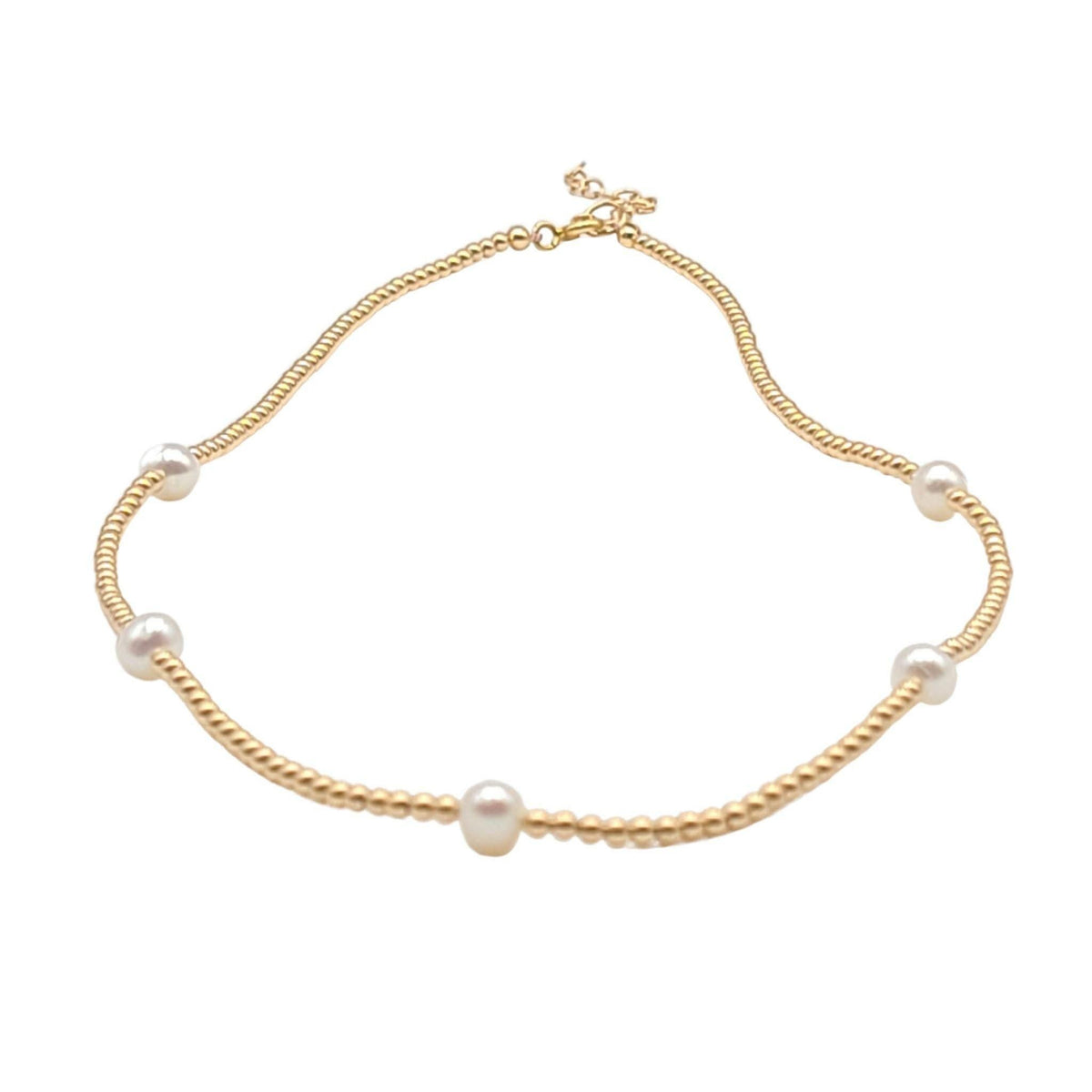
Within a relationship, pearls are most commonly associated with affection, appreciation, and a sense of lasting connection. They suit anniversaries, especially because of the 30th anniversary tradition, and they are a natural fit for a marriage or a long partnership.
That said, there is no universal romantic code. A pearl necklace is not an engagement signal, and it does not stand for fidelity or any specific commitment. Two people can give identical necklaces and mean entirely different things by them.
If you are giving one to a partner, the clearest way to attach meaning is to say what it stands for. A date, a memory, or a few honest sentences does more than any tradition can.
Pearl Necklace Meaning Across Cultures
Pearls have held significance in many places and periods, but the specifics vary, and the evidence is stronger for some claims than others.
What is well documented is the broad picture. The Gemological Institute of America notes that people have prized natural pearls as symbols of wealth and status for thousands of years. Western traditions often link white pearls with purity and tie pearls to weddings. Several cultures have connected pearls with the moon.
Chinese art and folklore feature a dragon chasing a pearl, and the pearl in that imagery is usually read as something precious or spiritually significant. Other traditions associate pearls with prosperity or good fortune.
It is worth being careful here. Many websites repeat long lists of ancient pearl beliefs without sources, and some of those claims do not hold up. It is safer to say that pearls have meant different things in different places than to assign one belief to a whole culture. People within any culture hold a range of views, and a modern wearer may have no connection to any of the historical symbolism at all.
Does the Type of Pearl Change the Meaning?
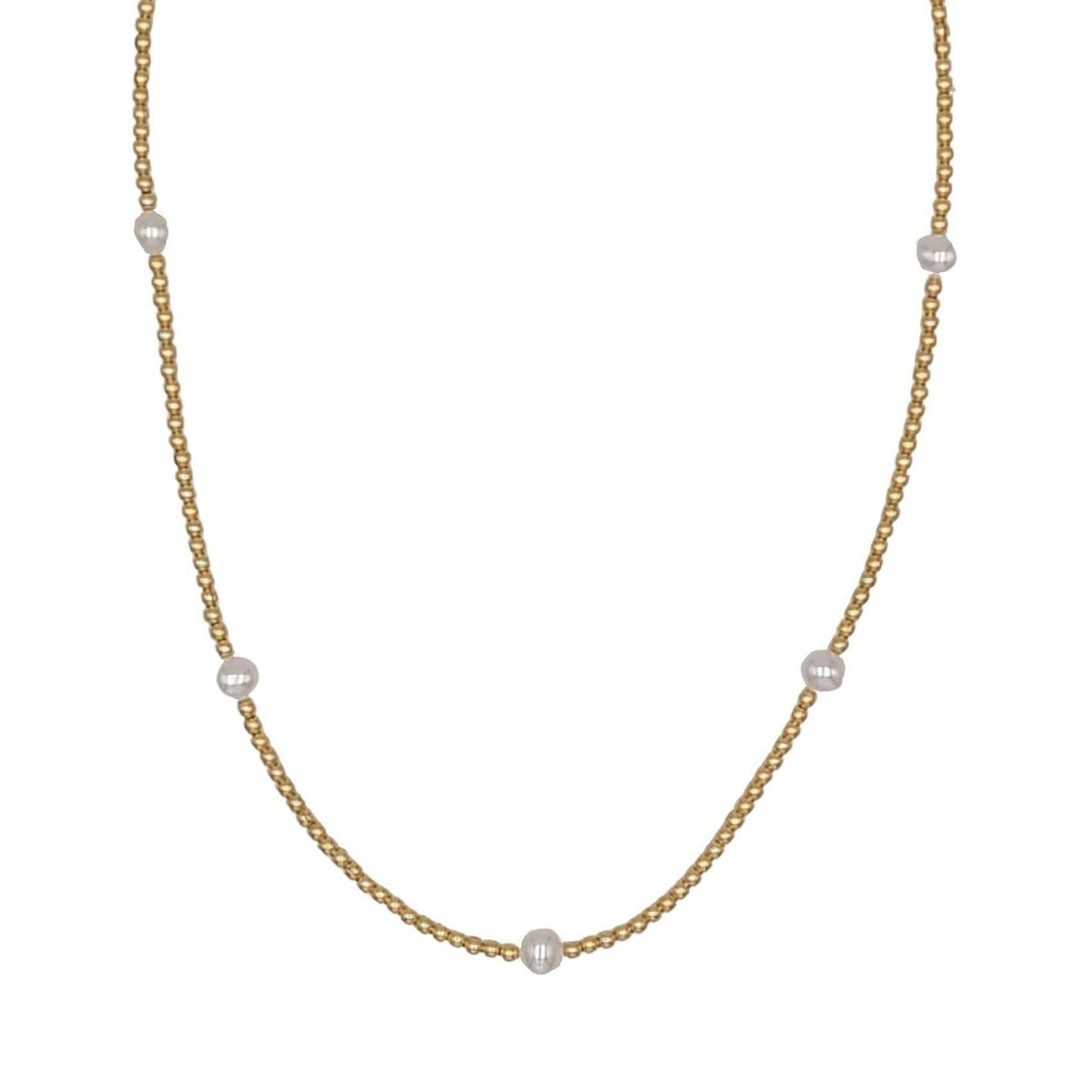
Color and style can shape how a necklace is perceived, but there is no rulebook assigning a fixed meaning to each type.
A classic white strand is what most people picture, and it carries the traditional associations of purity and formality. Cream and ivory tones tend to feel softer and warmer. Pink pearls often feel gentler and more romantic to many wearers. Black or darker pearls are usually seen as bolder and more dramatic, and some people read them as a statement of independence, though that is a style association rather than a tradition.
A single pearl on a chain has its own reading. With nothing else on the necklace, the pearl stands alone, and many people choose it for its simplicity or to mark one particular moment. A layered look with several pearl strands, or pearls mixed with gold chains, leans more expressive and contemporary.
Pearl pendants and modern designs often shift the mood away from tradition. None of this changes the actual pearl or any effect it has on emotion or personality. The meaning is what you and the people around you bring to it.
What Does Wearing a Pearl Necklace Say About Your Style?
Less than people assume, and that is a good thing. Pearls are a style choice with a wide range.
For everyday wear, a short strand or a single pearl pendant sits comfortably under a collar or over a plain tee. For formal occasions, a longer or fuller strand adds weight to a dress or a suit. With modern, minimal clothing, a small pearl on a thin chain barely registers but still finishes the outfit. And in a layered stack, one pearl necklace can balance a few plain gold chains so the whole thing feels intentional rather than busy.
The question to ask is what you want the necklace to do. If you want it to be noticed, choose size and contrast. If you want it quiet, go small and close to the neck. Necklace length matters too, since it decides where the pearl falls against your clothes.
Some people wear pearls for tradition, some for sentiment, and some for no symbolic reason at all. All of those are valid.
Are Pearl Necklaces Still Meaningful Today?
Yes, but the way they carry meaning has changed.
For some, pearls are tied to family. A pearl necklace passed down from a mother or grandmother holds meaning that has nothing to do with symbolism lists. It is a reminder of a person.
For others, pearls are simply a style they like, with little interest in history. And for many, the two overlap: they enjoy the tradition and also enjoy wearing it their own way.
Modern pearl designs have helped keep them relevant. A pendant with one pearl or a thin chain with a few pearls looks quite different from a heavy formal strand. Neither is more meaningful than the other. A wearer who picks the simple one for daily use and the traditional one for a wedding is using both for what they do best.
Final Thoughts
Pearls hold meaning because people have given it to them for a very long time, through weddings, anniversaries, family heirlooms, and personal milestones. That history gives a pearl necklace weight, but the most lasting meaning is usually the one attached to a specific moment or person.
Whether the necklace was inherited, gifted, or chosen for yourself, the story you attach to it is what makes it yours.
Frequently Asked Questions
1. What does a pearl necklace mean?
Traditionally it is linked with purity, wisdom, calm, and lasting love. Those are cultural associations, though, and the meaning for any one person comes from the occasion, the giver, and what the piece stands for to the wearer.
2. What does a pearl necklace symbolize for a woman?
Common associations include elegance, maturity, and milestones such as weddings or graduations. These come from fashion history and tradition. They do not define femininity or personality, and many women wear pearls purely because they like them.
3. What does a pearl necklace mean in a relationship?
It can express affection, appreciation, or a shared milestone, especially at an anniversary. It carries no universal romantic message, so the intention behind the gift matters more than the pearl itself.
4. Is a pearl necklace a meaningful gift?
It can be, mainly because pearls are tied to milestones and have a long tradition as gifts. The meaning changes with the occasion and the relationship, so a personal note makes the gift clearer.
5. What does a white pearl necklace symbolize?
In many Western traditions, white pearls are associated with purity and elegance. That is traditional symbolism, not a universal fact, and it does not say anything about the wearer.
6. What does a black pearl necklace mean?
Darker pearls are often seen as bolder and more dramatic, and some wearers connect them with individuality. Interpretations vary widely, and there is no fixed traditional meaning.
7. Does wearing pearls have a spiritual meaning?
For some people, yes. Several traditions have linked pearls with spiritual ideas, and individual belief plays a large role. There is no verified evidence that pearls carry protective or healing energy, so those claims are best treated as personal belief.
Share
