Flash Sale 70% Off
Give customers details about the banner image(s) or content on the template.
Write your store's popup content

There are more than twenty types of necklace chains available today, and knowing them by name makes shopping far easier. Each one uses a different link pattern that changes its strength, weight, and how it drapes.
This breakdown covers every major style along with pros and cons, a comparison chart, the less common chains most guides skip, a section on men's chain sizing, layering guidance, and a gold filled construction explainer most guides leave out entirely.
The different types of necklace chains below are grouped roughly from simplest construction to most intricate, so it is easier to compare how much metal and manufacturing time goes into each one.


Cable chains are made of uniform round or oval links connected in a straight, repeating pattern. This is the most common chain construction on the market and the base style used for most pendant necklaces, lockets, and charm necklaces. Quality cable chains have soldered-closed links; open links break more easily and are worth avoiding.
Pros: Distributes pendant weight evenly, resists kinking, easy to repair, layers well.
Cons: Very common, so it will not stand out as a statement piece on its own.
Curb chains use links that are twisted and flattened before being connected, so each link lies flush against the next. This creates a smooth, low-profile surface that resists tangling and is one of the strongest chain constructions available, able to support heavy pendants without stretching.
Pros: High strength, resists kinking, relatively easy to repair, available in a wide range of thicknesses.
Cons: Heavier gauges get expensive due to the amount of metal used; very common style.
Figaro chains alternate one elongated oval link with two or three shorter round links, repeating in a fixed pattern. The design originated in Italy and is a variation of the curb chain, sharing its strength and flexibility.
Pros: Strong and flexible, does not kink easily, visually distinctive without a pendant.
Cons: Expensive relative to length due to link weight; a lost link can be difficult to match exactly.
Box chains, also known as Venetian chains, are constructed from small square links that interlock at right angles, creating a smooth, nearly seamless surface that reflects light well.
Pros: Sleek, modern look, flexible enough to drape without tangling easily.
Cons: Can stretch out of shape if pulled hard, and can occasionally catch and pull hair.
Rope chains twist multiple small links into a tight spiral pattern, with each link connected in more than one place. That redundancy is what makes rope chains one of the more durable styles, since the chain can hold together even if a link fails.
Pros: Durable, flexible, classic look, sparkles well when diamond cut. Cons: Can pull hair if it catches wrong; hollow versions are easy to break and hard to repair cleanly.
Snake chains use overlapping metal plates instead of visible links, producing a smooth, continuous, flexible surface with no gaps for a pendant to catch on.
Pros: Elegant, modern look, pendants slide and center easily.
Cons: Can kink, stretch, or snag hair if bent sharply; repairs can leave a visible stiff spot.
Cuban link chains are a variant of the curb chain with tighter, more rounded links that lie nearly flat against the skin. This is the heaviest and most metal-dense chain style on this list, combining the bold look of a herringbone or omega chain with the flexibility and strength curb chains are known for.
Pros: Very durable, holds up well to daily wear, makes a strong visual statement alone. Cons: Heavy and expensive relative to length; almost never layered.
Byzantine chains, sometimes called Turkish chains, use an intricate woven link pattern that takes longer to produce than simpler chain styles, which raises the price relative to length.
Pros: Distinctive, uncommon look, dresses up or down well depending on thickness.
Cons: Not as strong as simpler chain designs of comparable weight; more costly to repair.
Singapore chains combine flat and rounded links that are interwoven and given a slight twist, often diamond cut for extra sparkle. The diamond cutting process removes small amounts of metal, which slightly reduces strength in exchange for shine.
Pros: Lightweight, sparkling, less common than cable or box chains.
Cons: Not well suited to heavier pendants; can be difficult to repair invisibly if it breaks.
Herringbone chains use short links connected in an offset V pattern, creating a wide, flat, thin profile that looks larger than the amount of metal used would suggest.
Pros: Bold, eye-catching look that is hard to replicate with other styles at a similar price. Cons: Prone to kinking and twisting; not suited to pendants; kinks are nearly impossible to fully repair.
Wheat chains, also called spiga chains, are constructed from twisted, woven oval links that move in one direction, resembling wheat stalks. They are rounded and flexible, which makes them a strong option for pendants since the links resist snagging.
Pros: Flexible, resists kinking and tangling, pairs well with most pendants.
Cons: Uses more metal than comparable styles, so it costs more; dirt can collect inside the woven links, requiring more frequent cleaning.
Paperclip chains are a cable chain variant with long, open oval links resembling an actual paperclip. The open link design uses less metal for the same visual size, which keeps cost down even when gold prices are high.
Pros: Affordable relative to its visual size, flexible and easy to wear.
Cons: Long, thin links are more prone to bending or breaking than a traditional cable chain of the same size.
Mariner chains use oval links with a bar running across the center of each one, a design derived from the heavy chains used to moor ships. The center bar adds strength and reduces twisting during wear.
Pros: Strong, flexible, resists knotting, works well solo or with a pendant.
Cons: The busier link design can overpower a very dainty pendant; costs more due to the extra metal in each link.
Franco chains interweave multiple curb-style links on different planes, creating a dense, almost square tube shape. It is more closely related to the curb chain in construction than it appears visually.
Pros: Very strong and dense while remaining flexible; symmetrical profile looks good from any angle. Cons: Expensive due to dense construction; slightly less flexible than a comparable curb chain, so it can kink if bent too tightly.
Ball chains connect small metal spheres with short bars, the same construction used in military dog tags and many keychains. This is one of the lighter, more casual chain constructions.
Pros: Fun, casual look, drapes without twisting, generally the most affordable chain style. Cons: One of the weaker chain styles; can be difficult to repair if a bead or bar is damaged.
Most buying guides stop at the styles above. A few additional types of chains necklace shoppers rarely see explained together show up often enough in jewelry cases to be worth recognizing.
Rolo Chain (Belcher): Essentially a cable chain with wider, rounder links, giving it a heavier look and somewhat more strength than a standard cable chain of the same width. Costs more due to the extra metal.
Foxtail Chain: Structurally similar to wheat chain but with a more square profile and interlocking chevron-style links. Strong and flexible, though it can kink if bent too tightly and requires more metal than flat styles like curb.
Omega Chain: Visually similar to herringbone, but built from small metal plates installed over a wire mesh substructure, which adds strength. Has a domed, curved profile and is not very flexible, so it needs careful storage.
Serpentine Chain (Cobra, S-Link, C-Link): A family of flat, interlocking link styles that lie smooth and thin. Good for layering, but can kink if bent the wrong way and are not ideal for heavy pendants.
Bismark Chain: A wide, flat, woven chain style, bolder and often more intricate than herringbone. Not well suited to pendants due to its flat profile, and typically worn alone.
Baht Chain (Thai Baht): Traditionally made in high karat gold (22 to 24K), historically used as both jewelry and a portable store of value. High karat gold is softer, so these chains bend more easily than 14K or 18K alloys.
The chart types of necklace chains below puts every major style side by side for a quick reference while shopping.
|
Chain Type |
Link Shape |
Best For |
Durability |
Layers Well? |
|
Cable |
Round or oval, uniform |
Pendants, everyday wear |
High |
Yes |
|
Curb |
Twisted, flattened |
Statement pieces, men's chains |
High |
Sometimes |
|
Figaro |
Long link, then short links |
Solo wear, vintage look |
Medium-high |
Yes |
|
Box |
Square, interlocking |
Delicate pendants |
Medium-high |
Yes |
|
Rope |
Twisted spiral |
Bold solo pieces |
Medium-high |
No |
|
Snake |
Overlapping plates |
Pendants, minimalist style |
Medium |
Yes |
|
Cuban Link |
Thick, flat, interlocking |
Statement, hip hop style |
Very high |
No |
|
Byzantine |
Woven links |
Special occasion, heirloom |
Medium |
No |
|
Singapore |
Twisted, diamond cut |
Dainty layering |
Medium |
Yes |
|
Herringbone |
Flat, angled |
Flexible statement pieces |
Low-medium |
No |
|
Wheat (Spiga) |
Paired ovals, woven |
Textured everyday wear |
High |
Yes |
|
Paperclip |
Elongated, flat |
Modern minimalist looks |
Medium |
Yes |
|
Mariner |
Oval with center bar |
Nautical, textured style |
High |
Sometimes |
|
Franco |
Woven square-profile tube |
Dense statement pieces |
High |
No |
|
Ball |
Small spheres |
Charms, dog tags, layering |
Medium |
Yes |
Types of mens necklace chains use the same link constructions listed above, but differ in gauge (thickness) and length. Cuban link, curb, and figaro are the most common styles in men's collections, with Franco and wheat chains also popular for their density and durability.
Men's chains typically run from 3mm to 10mm or thicker for Cuban link styles, compared to 1mm to 3mm for standard women's chains. Standard men's chain lengths range from 20 to 24 inches, versus 16 to 18 inches for women's chains.
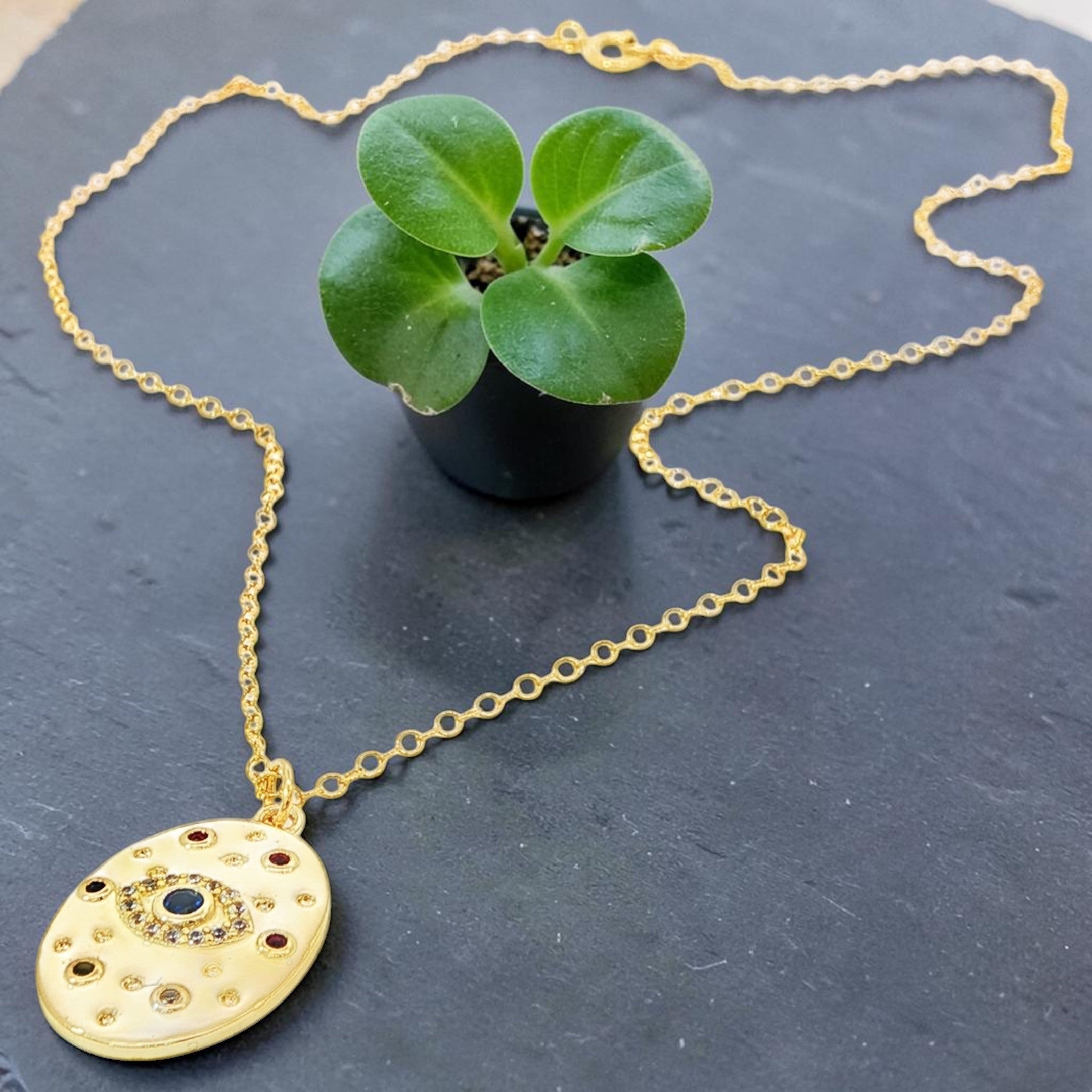
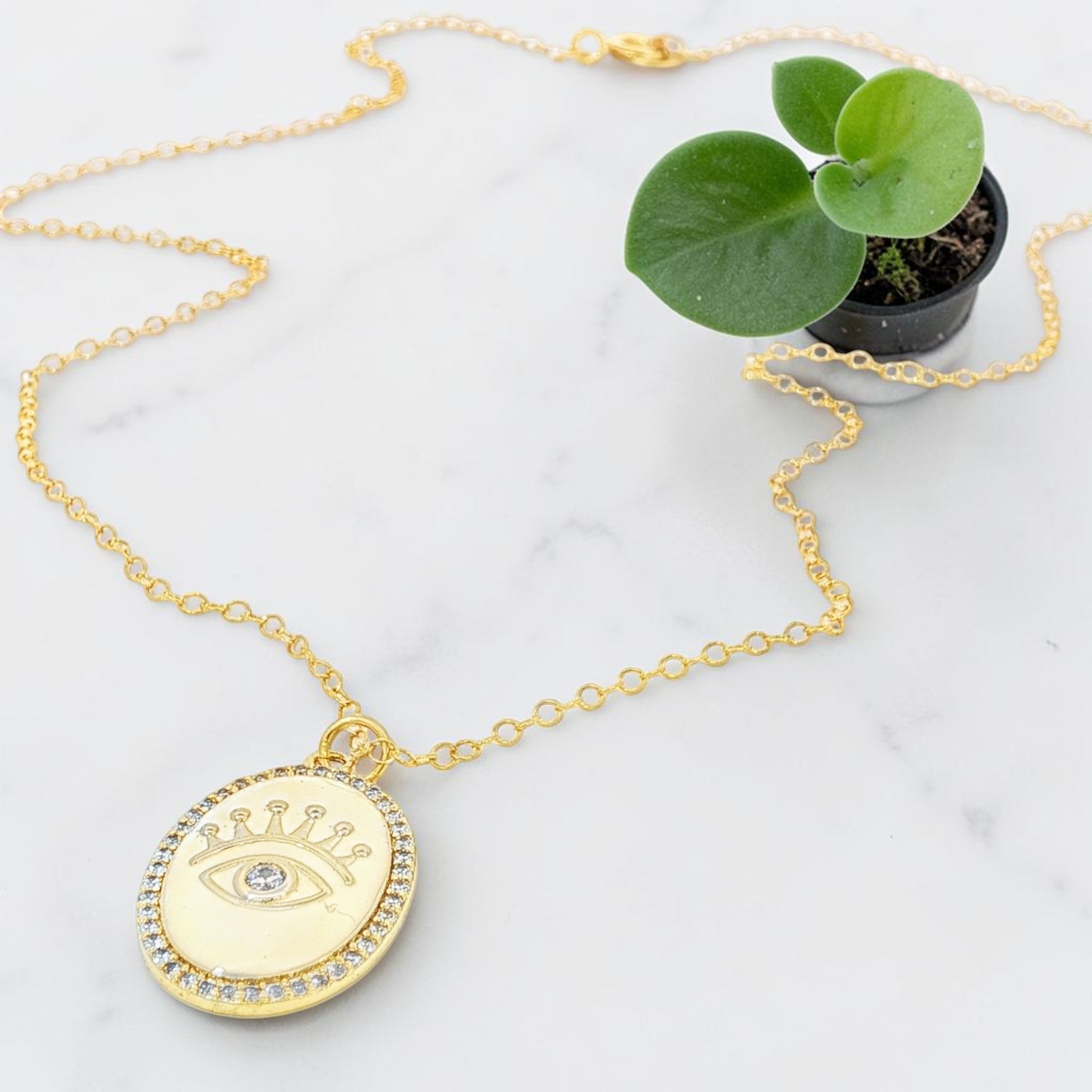
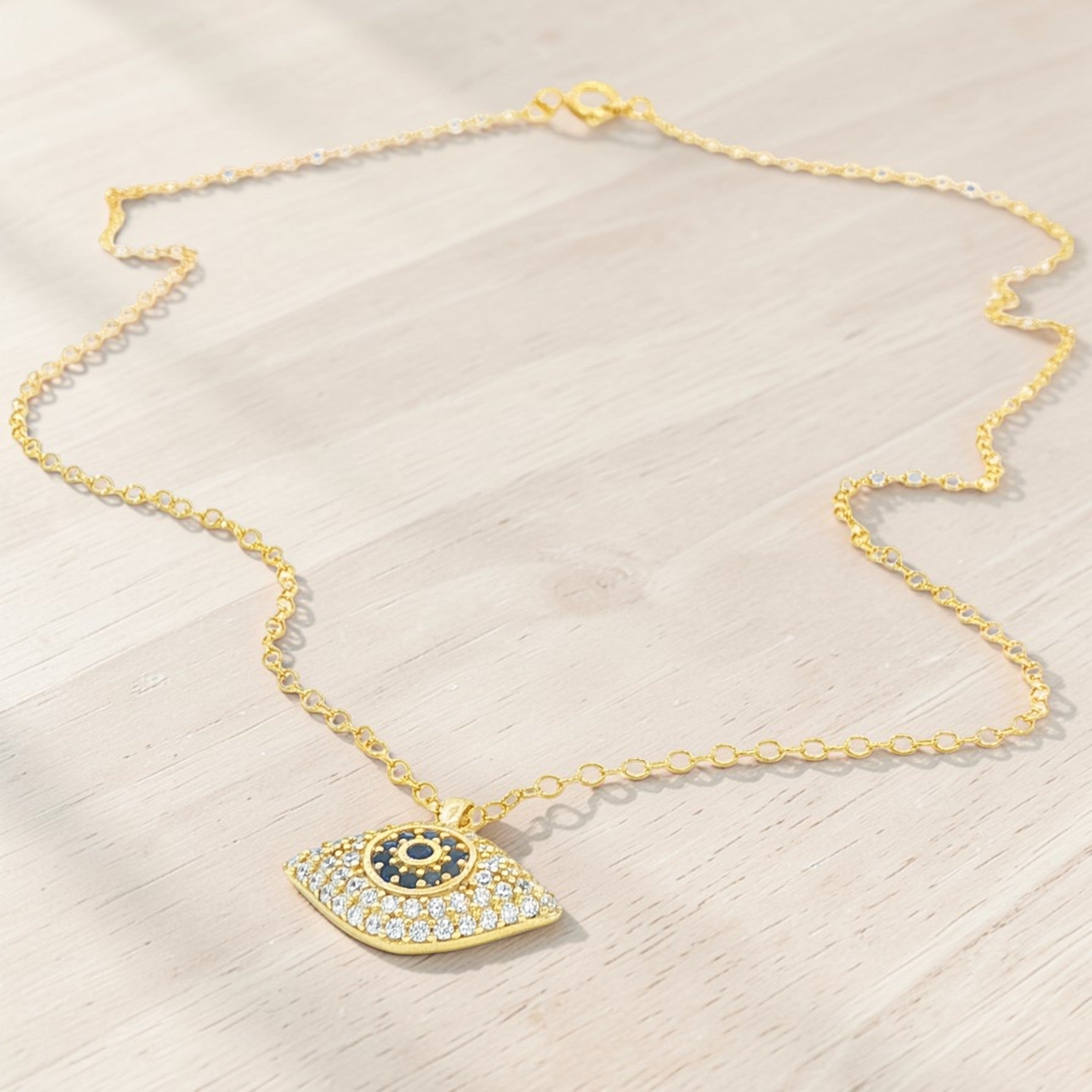
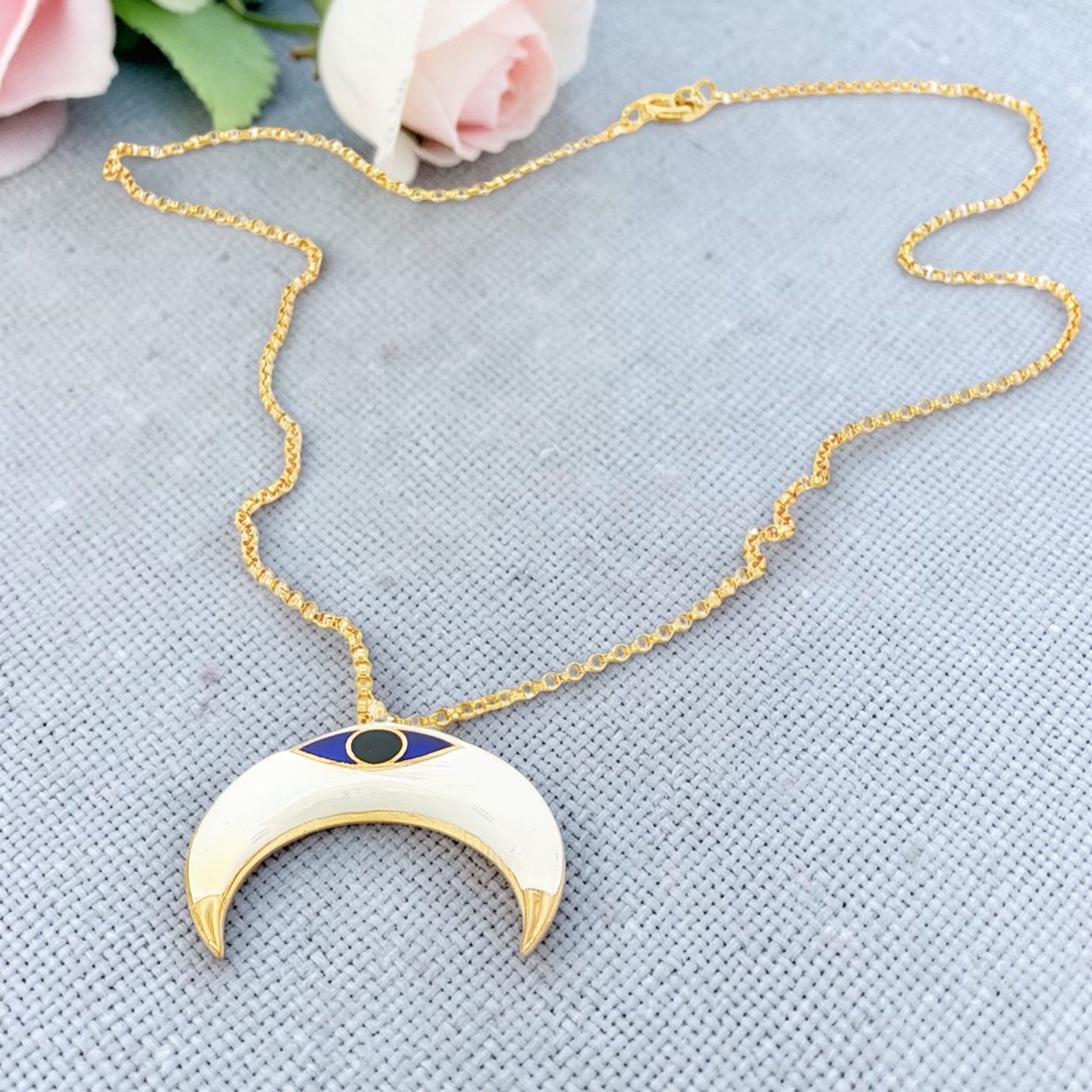
Some necklace styles distribute pendant weight more evenly than others. Cable, box, wheat, and mariner chains are the standard choice for lockets and gemstone pendants. A pendant that exceeds the recommended weight for a given chain gauge can stretch or damage the links over time.
Rope, Cuban link, byzantine, and Franco chains are typically strong enough to be worn without a pendant, since the link pattern itself provides the visual focal point. Flat styles like herringbone, omega, and bismark are generally not designed to hold pendants at all.
Layering works best with a clear structure rather than stacking chains at random.
Chain choice also depends on neckline. Shorter chains suit crewnecks and sit visibly above the collar. Longer chains work better with V-necks or open collars, where they can drape without being hidden by fabric.
Chain construction determines the link pattern. Metal construction determines how long the chain retains its color and finish. These are the four constructions used in necklace chains:
For chains intended for daily, long-term wear, metal construction affects longevity more than link style does.
Remove chains before showering, swimming, or sleeping to limit moisture exposure.
Store chains flat or hang them separately to prevent tangling, which is a primary cause of kinked links in snake, herringbone, and omega chains.
Wipe chains with a soft cloth after wear to remove oil and lotion residue.
Avoid direct contact with perfume and hairspray, which can dull metal finish faster than normal wear.
If a chain does knot, work it loose slowly rather than pulling. A pin and a drop of baby oil or olive oil on the knot makes it easier to separate without stressing the links.
Chain selection depends on three factors: whether the chain will carry a pendant, whether it will be layered with other pieces, and how much daily wear it needs to withstand. Even after narrowing down from over 10 different types of necklaces to a shortlist, cable, box, and wheat chains remain the most versatile for pendants and layering. Cuban link, rope, Franco, and byzantine chains work best as standalone statement pieces. Across all types of necklaces, metal construction, particularly the difference between gold filled and gold plated, has a greater long-term impact on appearance than chain style alone.


What is the strongest type of necklace chain?
Curb and Franco chains rank among the highest for durability due to their thick, interlocking link construction, which distributes tension evenly. Cuban link and rope chains are also strong choices. Box, herringbone, and bead chains are comparatively weaker and more prone to stretching or breaking.
What is the difference between a curb chain and a Cuban link chain?
Cuban link is a variant of the curb chain with tighter, more rounded links, giving it a bolder, heavier profile. Standard curb chains use flatter, twisted links and come in a wider range of thicknesses.
Which chain types layer best?
Cable, singapore, paperclip, wheat, and thin box chains are the most common choices for layering due to their flexibility and low profile. Thicker or flat styles like rope, Cuban link, herringbone, and bismark are typically worn alone.
Can gold filled jewelry cause skin discoloration?
This occurs less frequently with gold filled jewelry than with gold plated jewelry, since the bonded gold layer in gold filled pieces is significantly thicker and takes much longer to wear through to the base metal.
How can a chain's metal construction be identified?
Check for a stamp inside the clasp. Solid gold is marked with karat purity, such as 14K or 18K. Gold filled pieces are typically marked GF, or with a ratio such as 1/20 12K GF, indicating the proportion of gold to base metal.
What length chain is standard?
16 to 18 inches is standard for women's chains and sits at the collarbone, which works well with most pendants. 20 to 24 inches is standard for men's chains and for layering pieces meant to sit lower on the chest.
Share

Share information about your brand with your customers. Describe a product, make announcements, or welcome customers to your store.