Flash Sale 70% Off
Give customers details about the banner image(s) or content on the template.
Write your store's popup content

What do the different evil eye colors mean? Ask five different jewelry sites and you'll probably get five slightly different answers. There isn't one official color chart that everyone actually follows.
Blue and white is the version most of us picture first, that's the classic nazar look. But evil eye color meaning shifts a lot once you move past blue. A folk tradition from one region says one thing. A spiritual shop online says something else. Jewelry brands add their own twist on top of both, usually to sell more bead colors.
None of that is really a problem. Symbols pick up new layers as they travel, and the evil eye has been traveling for a very long time. What's misleading is when a blog presents one color chart as settled fact, as if it were carved in stone somewhere.
So here's a rundown of colors of evil eye meanings, what's closer to older tradition, what's mostly a modern jewelry invention, and how any of this should factor into buying an evil eye bracelet.
The eye shape itself is the main event. Watchfulness, warding off envy or ill will, that idea shows up across Mediterranean, Middle Eastern and South Asian traditions in different forms.
Color is layered on afterward. Blue got there first mainly because that's the natural color of the glass used in Turkish nazar boncuğu for generations, not because someone sat down and decided blue meant calm. Most other colors arrived later through jewelry making rather than ritual.
So when a chart tells you green means "growth" or yellow means "happiness," take that as a modern reading. It's not something handed down for a thousand years, and it's fine to like it anyway.


A quick reference for how evil eye colors and meanings get discussed right now. This is a snapshot of common usage, not a rulebook.
|
Color |
Commonly Associated With |
Worth Knowing |
|
Blue |
Protection, calm |
The original, most recognizable evil eye color |
|
Light Blue |
Openness, peaceful energy |
A softer take on classic blue |
|
Red |
Courage, vitality, passion |
Mostly a modern symbolic association |
|
Green |
Growth, renewal, balance |
Meaning varies quite a bit by source |
|
Yellow |
Optimism, confidence |
Popular in newer jewelry interpretations |
|
White |
Purity, clarity |
Symbolism differs across regions |
|
Black |
Strength, grounding |
Contemporary reading, not classic nazar tradition |
|
Clear |
Simplicity, openness |
Common in modern glass bead jewelry |
|
Turquoise |
Protection, calm |
Overlaps blue and green symbolism |
|
Aqua |
Calm, emotional balance |
A newer jewelry color choice |
|
Olive |
Earthiness, balance |
Least standardized of the group |
None of these are universal facts, and they shouldn't be sold to you as such either.
Blue is the default, and there's a real reason for that. The original glass amulet, blue and white, has been the visual shorthand for the evil eye for centuries now.
Historically its job wasn't really about mood. It was about deflecting "the eye," the envious glance believed to bring bad luck onto whoever it landed on. Blue mattered because blue glass was what people had on hand, not because anyone assigned it a feeling first.
Calm and peace got attached to blue much more recently. It fits well enough. Blue already reads as cool and settling in general color psychology, so the newer meaning slides in comfortably next to the older one. That's part of why blue still anchors most evil eye color meaning conversations, whether you're looking at a single blue evil eye bracelet or a mixed set that includes it among several other colors.
Quick clarification before anything else. A red evil eye bead is not the same tradition as a red string tied around the wrist, even though people conflate the two constantly online. The string comes largely out of Kabbalah practice. The bead is its own thing.
As a standalone color, red gets tied to courage, vitality and passion. Nothing wrong with that, but it's a modern reading, borrowed from how red functions in general symbolism, energy and heat and urgency, more than from any documented ancient evil eye practice built specifically around red.
Some sellers will tell you red wards off fear or brings boldness. Believe it if it resonates. Just don't mistake that for a proven claim.
These four don't have much ancient evil eye history individually, so it makes sense to look at them together rather than stretch each into its own separate origin story.
Green picks up growth, renewal and balance, largely borrowed straight from how green functions in nature symbolism generally. Yellow leans toward optimism and confidence for the same reason, it's a bright color and people read bright colors as upbeat.
White tends toward purity and clarity, and it's often the quieter pick, especially paired with gold filled accents. Some traditions actually treat white as a background or neutral color rather than a standalone symbol, which is part of why the classic nazar pairs blue with white in the first place.
Black is the outlier of the group. It's associated with strength and grounding in current jewelry writing, and it reads as bolder and more graphic than the pastel options. There's no documented place for black in the original blue and white tradition though, so this one is contemporary through and through.


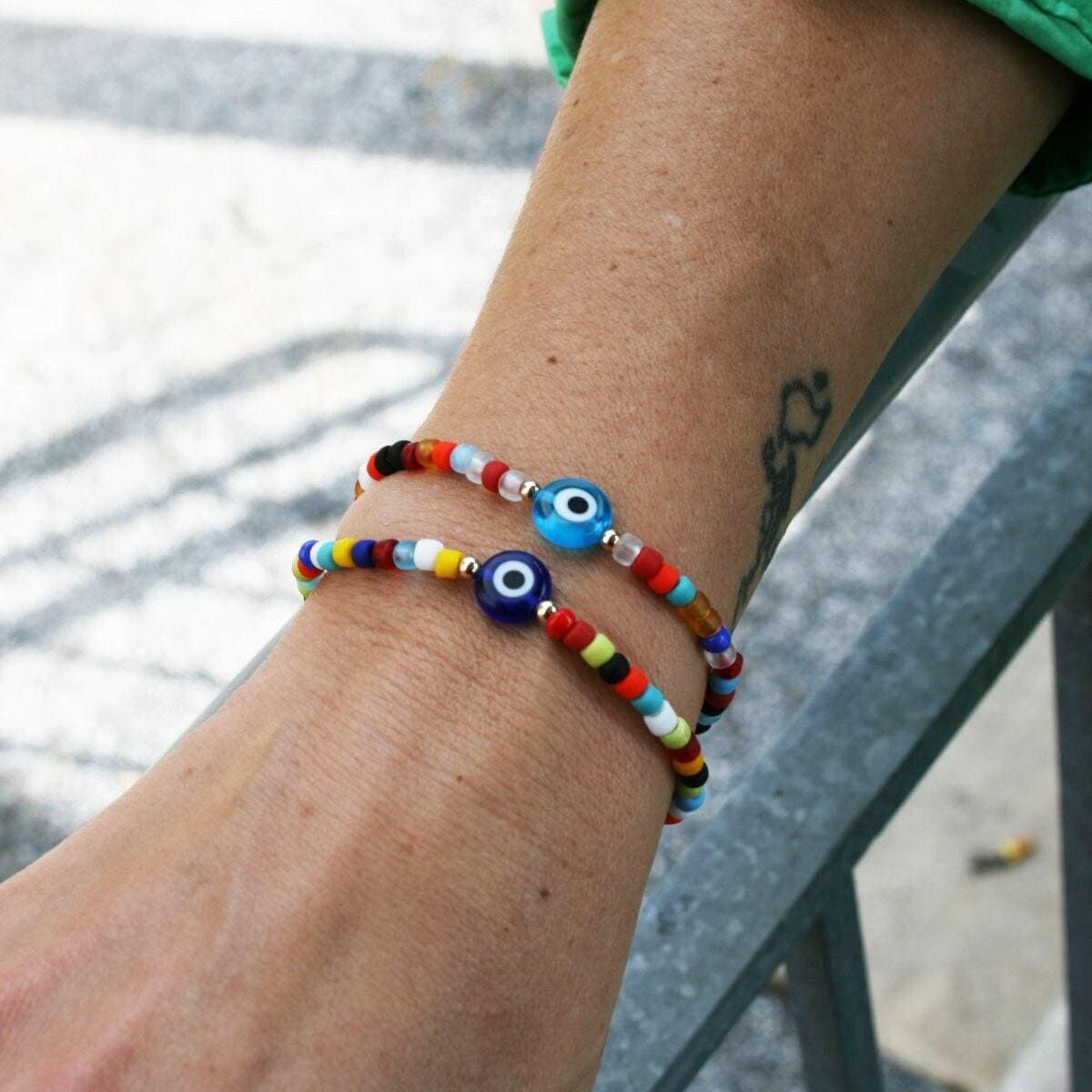
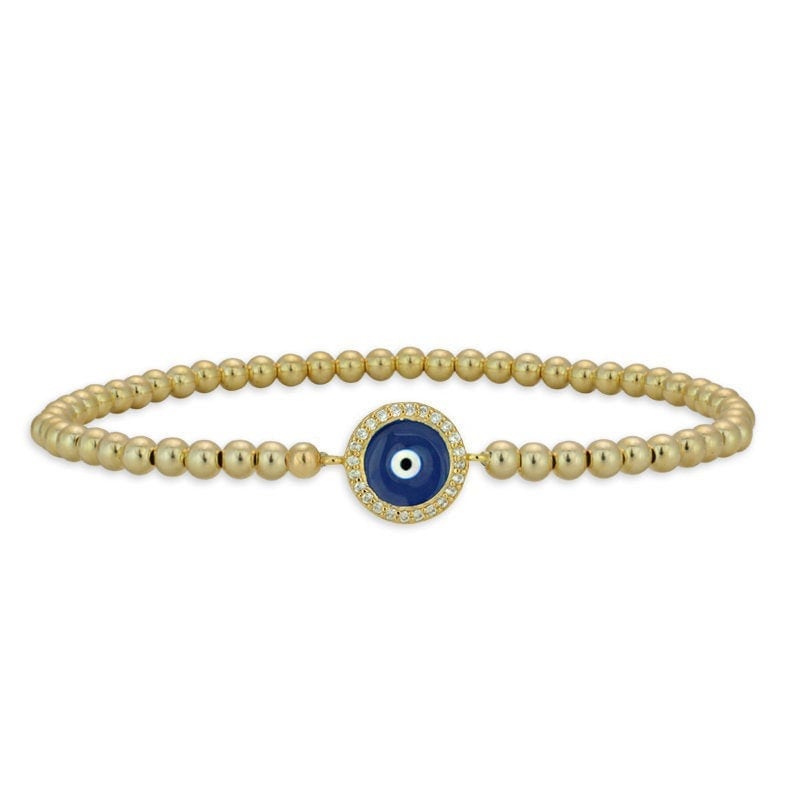
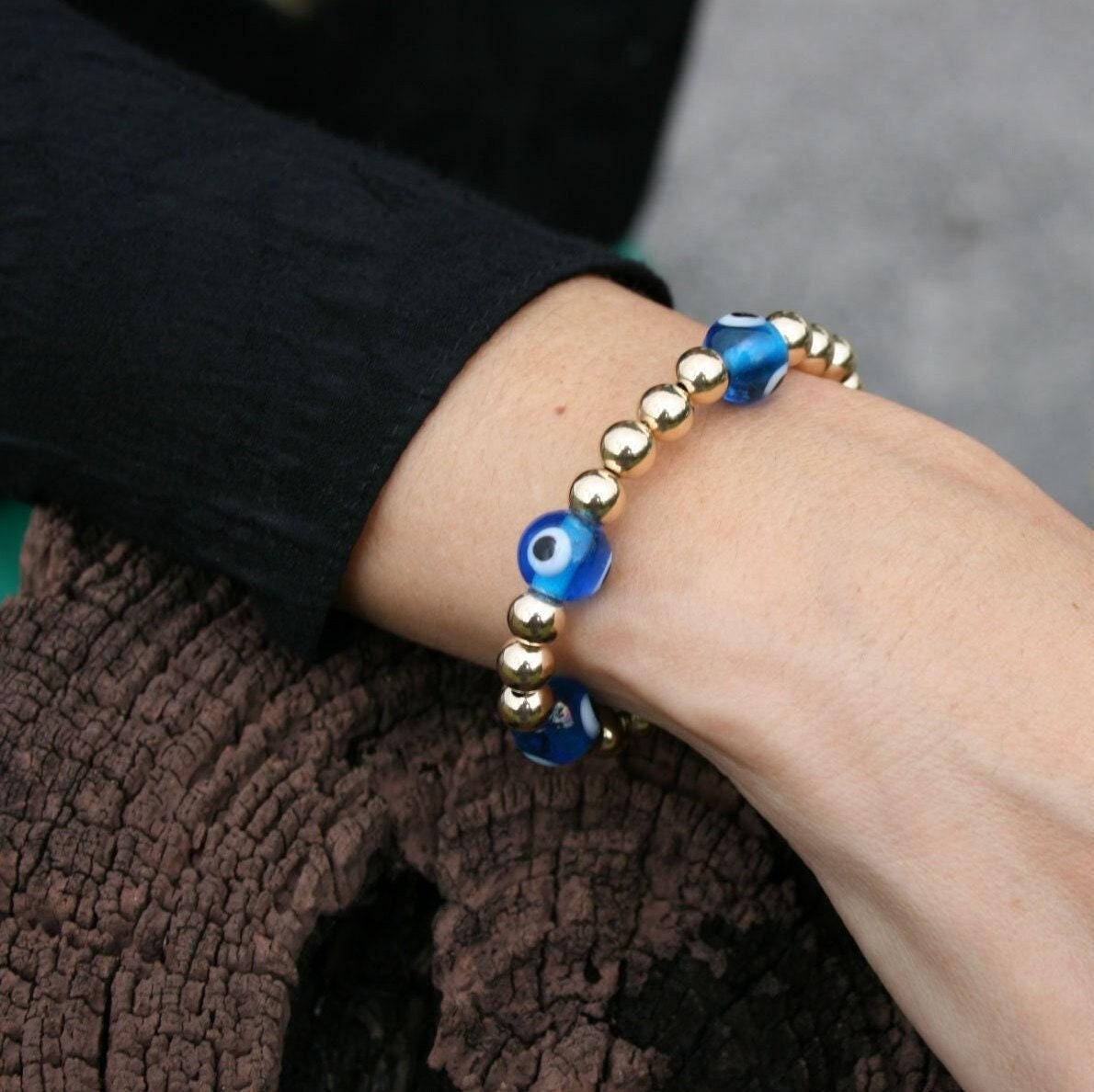
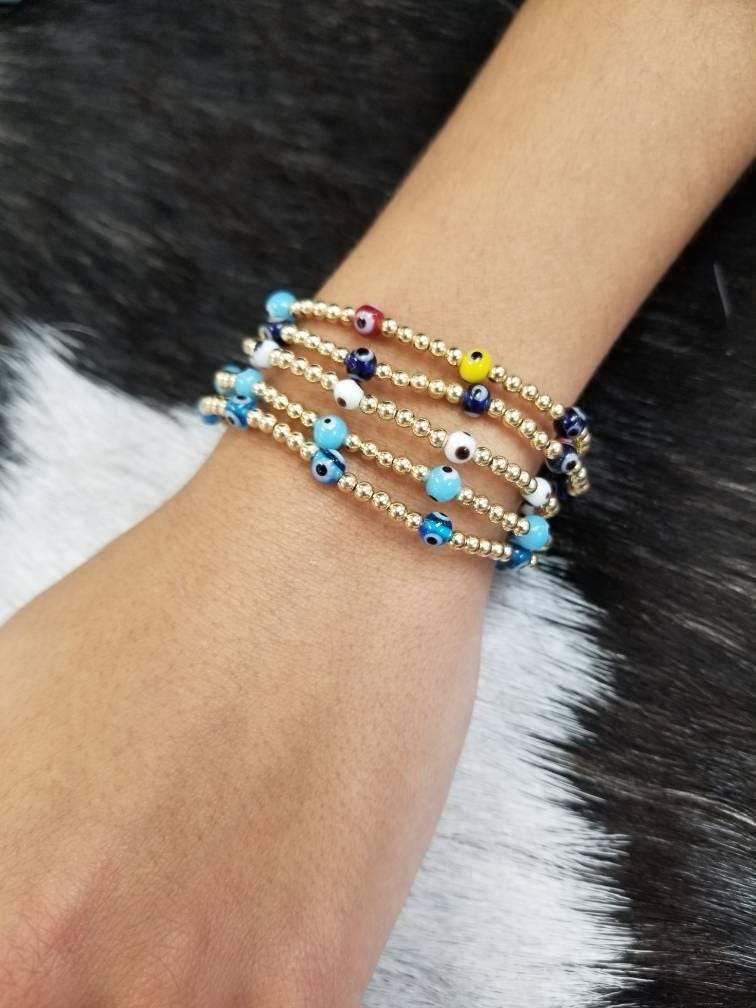
Isabella Celini's bead selection actually leans hard into this less traditional end. One gold filled evil eye bracelet uses 12mm glass evil eye beads in aqua, turquoise, red, white, yellow and olive, strung on tarnish free gold filled chain.
Turquoise sits close to both blue and green, so it usually picks up a mix of protection and calm. Aqua reads similarly, more calming than protective if you're being precise about it.
Olive is honestly the hardest one to pin down. There's no standardized meaning attached to it, so most people choose it for how it looks rather than what it's supposed to represent.
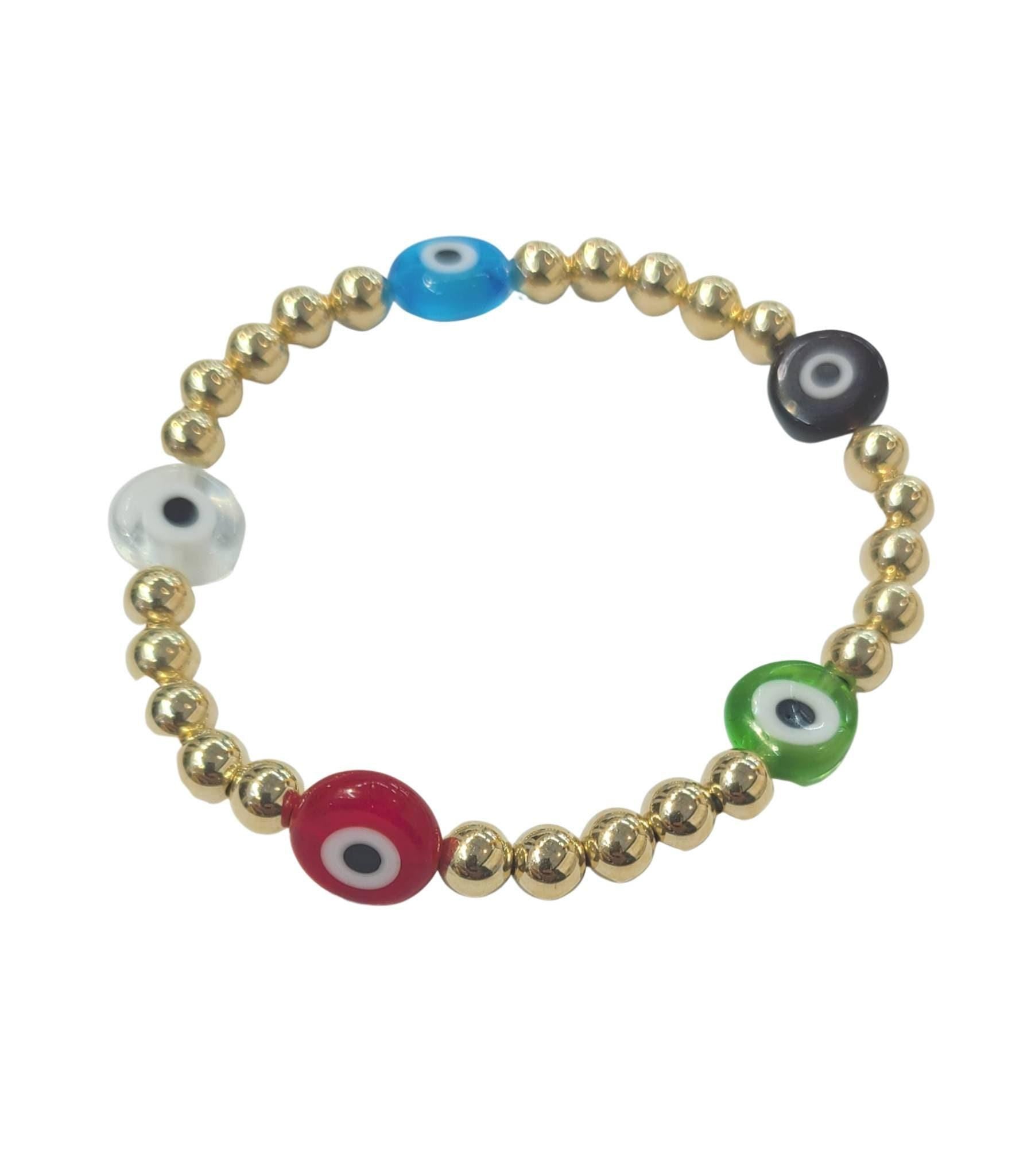
A separate evil eye protection bracelet goes even further, with multicolor, light blue, black, dark blue, clear and green beads next to red. Clear beads get read as simplicity or openness mostly by default, since there's not much else to project onto a transparent bead.
Evil eye bracelet color meaning really comes down to two things stacked on each other, the general symbolism of the eye itself and whatever you personally feel about that particular shade.
Someone who wants the most recognizable, traditional look leans toward blue. Someone chasing a bolder statement usually ends up in red. Green tends to appeal if renewal and balance feel relevant right now, white if you'd rather keep things quiet, black if you want a bit more edge without losing the eye motif.
None of these colors offer more actual protection than another, to be clear. The differences are symbolic and visual, not measurable in any real sense.
Also Read: What is the meaning of Evil Eye Jewelry?
No. A color chart from a Greek folk tradition, a Turkish jewelry seller and an American wellness blog can all describe the exact same green bead in three different ways.
Historical symbolism, regional folk belief, modern spiritual practice and contemporary jewelry design are four separate sources, and they don't always line up. Charts online tend to squash all four into one tidy table because it's convenient, not because it's accurate.
That doesn't make anyone's belief less real to them. It just means the color chart above, like most others, is a snapshot of common current usage, not a fixed universal rule handed down from anywhere.
Blue and white stays recognizable because it's the oldest, most consistent version of the symbol out there. Picture an evil eye in your head right now, it's probably blue.
Multicolor designs are newer, and they came about mostly because jewelry makers wanted more variety without dropping the eye motif entirely. A bracelet strung with seven different bead colors isn't hiding deep layered symbolism, it's giving shoppers more options.
Neither one is more correct than the other. Blue leans traditional, multicolor leans fashion forward, and choosing between them is really about what you want the piece to say rather than which one carries more genuine protective weight.
There's no wrong answer here, just different starting points depending on what you care about most.
Going by symbolism, pick whatever meaning actually resonates, calm for blue, courage for red, renewal for green. Going by tradition, blue wins every time since it's the color tied to the original design. Want something a little less expected? Aqua, olive, black and clear all keep the eye motif while looking less like everyone else's bracelet.
Buying it as a gift changes the math slightly. Look at what the person already wears instead of assuming there's one universally "correct" evil eye color, then match the bead shade to their existing jewelry rather than to a chart.
Also Read: Pink Evil Eye Meaning: What Does a Pink Evil Eye Symbolize?
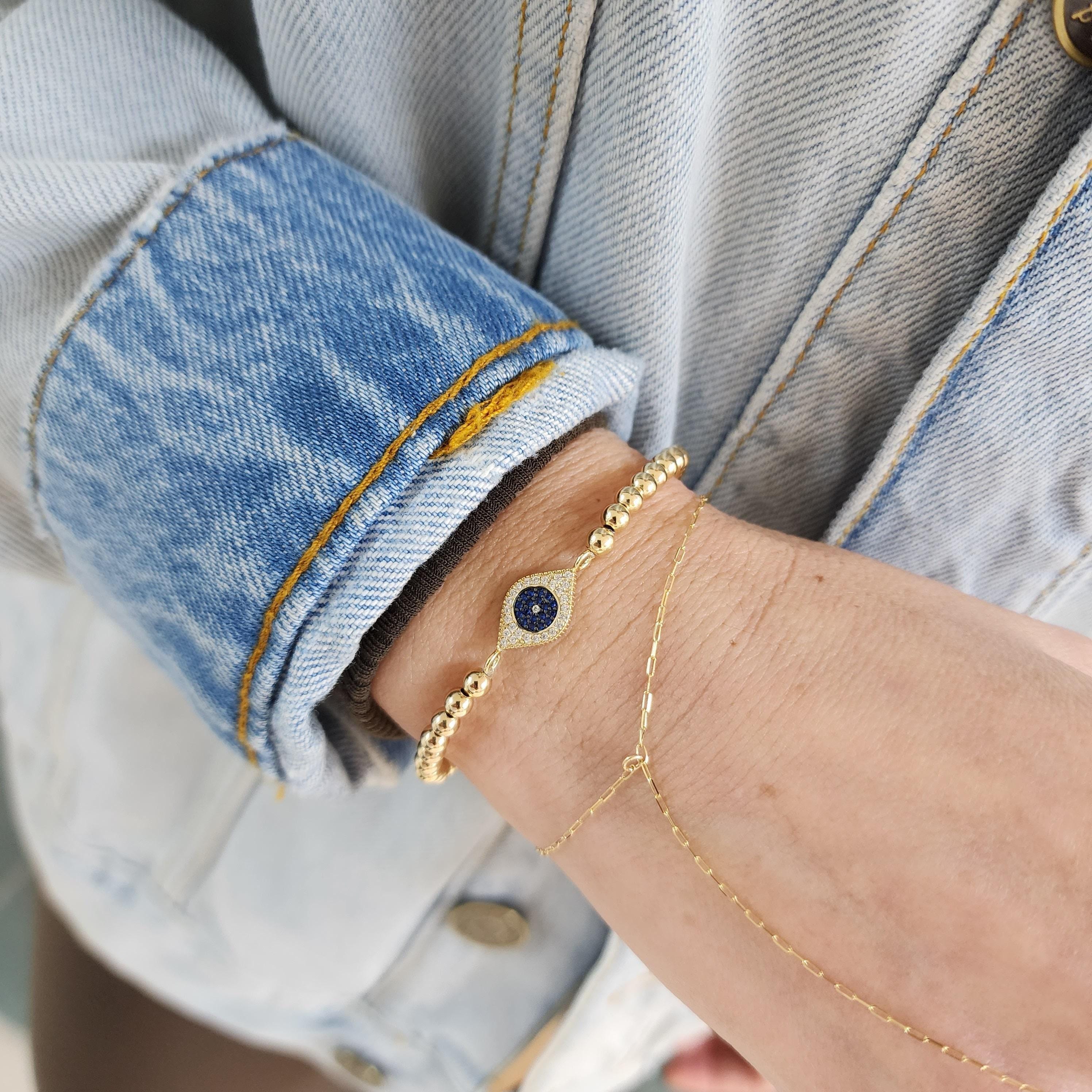
One bracelet on its own works fine, and it also stacks nicely with simple gold filled bangles or chains. Blue behaves almost like a neutral here, it pairs easily with just about anything else on the wrist.
Red and multicolor pieces read louder, so they usually work best as the single standout piece rather than buried among three or four other bracelets.
If a specific color's symbolism actually matters to you personally, wear it somewhere visible instead of stacking it under other jewelry. Otherwise, the meaning kind of gets lost in the pile.
What does the blue evil eye mean?
Blue ties back to protection and, more recently, calm. It's the original color in classic nazar beads, which is why it's still the most recognized version of the symbol.
What does a red evil eye symbolize?
Red gets linked to courage, vitality and passion. That meaning is mostly modern rather than something from the older blue and white tradition.
What do the different evil eye colors mean?
There's no single agreed answer. Meanings come from regional folklore, modern spiritual practice and jewelry design trends mixed together, and they shift depending on the source.
What does a green evil eye mean?
Green usually points to growth, renewal and balance. It doesn't have much documented ancient history behind it specifically, so treat it as a contemporary reading.
What does a black evil eye symbolize?
Black gets described as strength, grounding and resilience in current jewelry writing, though it's a modern addition rather than part of the classic nazar design.
What does an evil eye bracelet color mean?
Usually a mix of the general protective symbolism of the eye shape and whatever personal meaning that specific bead color holds for the wearer.
Is there one universal meaning for every evil eye color?
No. Different evil eye color meanings show up across different cultures and modern sources, and no single chart is treated as final everywhere.
Which evil eye color is best for a bracelet?
There isn't an objectively best one. Blue works for anyone wanting the classic look, while red, black or aqua suit people after something a bit different while keeping the eye motif intact.
Share

Share information about your brand with your customers. Describe a product, make announcements, or welcome customers to your store.