Flash Sale 70% Off
Give customers details about the banner image(s) or content on the template.
Write your store's popup content

If your mood necklace turns purple, the traditional interpretation is usually passion, romance, creativity, excitement, or strong emotional energy. Purple is often treated as one of the more emotionally expressive colors on traditional mood-jewelry charts.
There is an important detail, though: these meanings are symbolic interpretations, not scientific measurements of emotion. A mood necklace does not actually read your feelings or determine whether you are happy, in love, excited, or stressed. The pendant contains a thermochromic material that changes color as its temperature changes. Your skin temperature, body contact, room temperature, circulation, and physical activity can all affect that change.
So, if you're asking what does the color purple mean on a mood necklace, the short answer is romance, passion, creativity, and emotional intensity according to traditional mood-jewelry symbolism. The physical reason it turns purple is temperature.
Purple is commonly associated with romance, passion, creativity, imagination, excitement, and emotional intensity on traditional mood necklace color charts.
The exact interpretation can vary. There is no universal mood-necklace color chart that every manufacturer follows. One necklace may describe purple as passion, while another may connect a similar shade with romance, creativity, or heightened emotions.
That makes the color fun to interpret, but it also means you should use the chart supplied with your particular necklace when available.
|
Purple Association |
Traditional Mood Meaning |
|
Romance |
Affection or romantic feelings |
|
Passion |
Strong emotional energy |
|
Creativity |
Imagination and inspiration |
|
Excitement |
Heightened emotional energy |
|
Intensity |
Strong or noticeable feelings |
These descriptions are traditional mood-jewelry interpretations. They are not scientifically validated ways of identifying someone's emotional state.
A purple pendant does not prove that you're in love, feeling passionate, or experiencing a particular emotion. It simply means the thermochromic material has reached a temperature at which it reflects light differently and appears purple.
Many traditional mood charts treat purple as a positive or emotionally warm color.
It is commonly connected with romance, passion, creativity, imagination, excitement, and strong feelings. So if your necklace changes from another shade to purple, traditional mood-jewelry symbolism would generally give the color an emotionally expressive interpretation.
That does not make purple objectively a "good" or "bad" mood.
Mood necklaces are designed around symbolic color associations. They are not psychological tests, medical devices, or reliable instruments for measuring emotional states.
If you see purple while you're relaxing with someone you care about, you might enjoy interpreting it as a romantic color. If it appears while you're working on something creative, you might connect it with imagination. That's part of the appeal of mood jewelry.
The color itself, however, cannot tell you why the necklace changed.
A mood necklace changes color because of a thermochromic material, a material whose optical appearance changes in response to temperature.
The pendant is not detecting your thoughts. It is not measuring your emotions directly. Instead, the material reacts when its temperature changes.
Several factors can affect the temperature around the pendant:
The necklace may therefore turn purple when the temperature around the thermochromic material reaches the range associated with that color.
Possibly, but indirectly.
Emotions can be accompanied by physiological changes. For example, excitement or nervousness can affect circulation and other physical responses. Physical activity can also change skin temperature.
The necklace is responding to the physical temperature change, not identifying the emotion that caused it.
That distinction is easy to miss.
If you become excited and your necklace turns purple at the same time, the necklace has not scientifically determined that you are excited. It has responded to a temperature change that may have happened alongside your emotional or physical state.
Different mood jewelry products also use different thermochromic formulations and calibration ranges, so there is no single temperature at which every mood necklace turns purple.
The traditional symbolism behind purple is one reason mood necklaces remain popular.
Purple has long been associated with imagination, intensity, romance, and emotional expression. In mood jewelry, those associations are simplified into color meanings that make the changing pendant fun to interpret.
Purple is often associated with affection and romantic feelings. A purple mood necklace may therefore be interpreted as suggesting romantic warmth or attraction.
That is a symbolic reading rather than evidence that the wearer is in love.
Purple is also commonly connected with passion and strong emotional energy.
If the pendant changes to a deeper purple, some traditional charts interpret the shade as stronger emotional intensity.
Purple is frequently connected with imagination and creative thinking. Someone wearing a mood necklace while drawing, writing, designing, or working on a creative project may enjoy this interpretation.
Again, the color does not measure creativity. It is simply a traditional association.
Purple can also represent heightened emotional energy or excitement on some mood-jewelry charts.
An excited person may also experience physical changes that affect skin temperature, but the necklace cannot determine whether excitement is actually responsible for its color.
Light purple or lavender is sometimes given a softer interpretation than darker purple.
Traditional mood-jewelry charts may associate light purple with:
The distinction between light purple and dark purple is not universal.
One manufacturer may use several purple shades, while another may show only one purple color. The actual appearance can also change depending on lighting and the temperature of the thermochromic material.
So if your necklace looks lavender rather than deep violet, it is reasonable to use the traditional interpretation associated with lighter purple, but the manufacturer's own chart should take priority.
Dark purple is sometimes interpreted as stronger passion, deeper emotion, romantic intensity, creativity, or heightened emotional energy.
That interpretation makes sense within traditional mood-jewelry symbolism, where darker shades are sometimes given stronger emotional descriptions.
However, dark purple does not automatically mean that your emotions are stronger.
The shade you see depends partly on the thermochromic material, its temperature response, the lighting around it, and the particular design of the necklace.
In other words, a darker purple should not be treated as a scientific measurement of stronger feelings.
No. Purple does not scientifically prove that you're in love.
The connection between purple and love comes from traditional mood-jewelry symbolism.
If your necklace turns purple while you're with someone you love, you can certainly enjoy the symbolism. That's part of what makes mood jewelry interesting.
But the pendant itself cannot distinguish between:
All of these factors can influence the temperature of the thermochromic material.
So the most accurate interpretation is:
Purple traditionally represents romance, passion, creativity, excitement, or emotional intensity, but the necklace is responding to temperature rather than directly detecting love.
No, not directly.
A mood necklace is not a device that analyzes emotions. Its color-changing effect comes from temperature-sensitive material.
Your body temperature and skin temperature can change for many ordinary reasons.
For example:
An emotional response can sometimes occur alongside physical changes, but the necklace cannot identify which factor caused the temperature change.
That's why mood necklace color meanings are best viewed as fun symbolic interpretations rather than scientific emotional readings.
Mood necklaces can display several colors, although not every product uses the same range.
The meanings below represent common traditional interpretations rather than a universal scientific standard.
|
Mood Necklace Color |
Traditional Meaning |
What the Color Physically Reflects |
|
Black |
Tension, stress, or uncertainty on some charts |
A temperature range represented by the thermochromic material |
|
Gray |
Nervousness, worry, or unsettled feelings |
A different temperature response |
|
Brown |
Restlessness or mixed emotions |
Temperature around the pendant |
|
Amber |
Nervous energy or mixed emotional states |
Thermochromic response to temperature |
|
Yellow |
Uneasiness, alertness, or changing emotions |
Temperature-dependent color response |
|
Orange |
Energy, excitement, or enthusiasm |
Temperature around the color-changing material |
|
Green |
Calmness, balance, or a neutral emotional state |
Thermochromic response |
|
Blue-Green |
Relaxation or emotional balance |
Temperature-dependent optical change |
|
Blue |
Calmness, relaxation, or peacefulness |
Temperature around the pendant |
|
Dark Blue |
Deeper relaxation or contentment on some charts |
A different thermochromic color state |
|
Purple / Violet |
Romance, passion, creativity, excitement |
Temperature-dependent change in the material |
|
Pink |
Affection, warmth, or romantic feelings |
Thermochromic response |
|
Red |
Passion, energy, or strong emotion |
Temperature-dependent color change |
There is one important point to keep in mind: color sequences and meanings vary between products and manufacturers.
A mood necklace may not display every color in this table. The same color can also have slightly different symbolic meanings depending on the chart supplied with the jewelry.
If your necklace came with a manufacturer's color guide, use that guide as the reference for your particular piece.
If your mood necklace stays purple for a long time, that does not necessarily mean that you are constantly experiencing passion or romance.
There are several possible physical explanations.
Because the pendant is worn close to your body, the temperature around it may remain relatively stable.
If that temperature corresponds to the purple range of the particular thermochromic material, the necklace may stay purple.
A necklace that sits directly against your skin can behave differently from one hanging loosely over clothing.
Skin contact can provide a more stable source of heat, which may keep the thermochromic material within a particular color range.
Room temperature can affect the pendant.
A necklace worn indoors in a warm room may display a different color from the same necklace worn outdoors in cooler conditions.
Exercise, walking, dancing, or other activity can increase body heat and change circulation. This may affect how the pendant responds.
Different mood necklaces can use different thermochromic formulations.
That means one necklace cannot be expected to behave exactly like another.
Purple can appear lighter, darker, bluer, or more reddish depending on the surrounding light.
A necklace that looks dark purple under one type of lighting may appear closer to violet or lavender under another.
Possibly, but staying purple by itself does not prove that the necklace is damaged.
If the color never changes even when the necklace experiences obvious temperature changes, the thermochromic component may no longer be responding properly.
A sudden color change is usually easy to explain through temperature.
You might notice the pendant turn purple after:
An emotional experience may happen at the same time, but that does not establish that the emotion caused the color change.
For example, imagine you're getting ready for a date and notice your necklace suddenly turns purple. The traditional interpretation might be romance or passion, which makes the moment fun.
Physically, however, the pendant may simply have warmed because it is touching your skin or because the surrounding temperature changed.
Both explanations can exist at the same time, but only the temperature change is directly related to how the thermochromic material works.
A purple mood necklace and a purple mood ring work on the same basic principle: both use temperature-sensitive material to create a color-changing effect.
The main difference is where the jewelry sits on the body.
|
Feature |
Mood Necklace |
Mood Ring |
|
Body placement |
Around the neck |
On a finger |
|
Temperature exposure |
Affected by neck skin, clothing, and surrounding air |
Strongly affected by finger temperature and surrounding conditions |
|
Skin contact |
Depends on how the pendant hangs |
Usually direct and continuous |
|
Color changes |
Can respond as the pendant warms or cools |
Can respond as the stone or material warms or cools |
|
Emotional accuracy |
Not a scientific mood detector |
Not a scientific mood detector |
|
Main principle |
Thermochromic color change |
Thermochromic color change |
Neither one is scientifically measuring emotion.
A ring can behave differently from a necklace because the two pieces are exposed to different temperatures. Your hands may become cooler or warmer than your neck, while a necklace may be affected more strongly by clothing and room temperature.
So a purple mood ring and a purple mood necklace can show different colors at the same moment without either piece being defective.
No.
This is one of the most important things to remember when looking up a mood necklace color chart online.
Mood jewelry manufacturers can use different:
Because of these differences, there is no universal rule that says every purple mood necklace means exactly the same thing.
One chart may describe purple as passion. Another may describe it as romance or creativity. A third may combine several of those interpretations.
The manufacturer's chart for your specific necklace is therefore the most relevant reference.
If you want to interpret your necklace's color without overthinking it, start with the product's own color chart.
Then consider the physical conditions around the pendant.
Look at:
This does not make the necklace a scientific mood detector. It simply gives you more context for understanding why its color changes.
There is a clear difference between the science behind the color change and the symbolism attached to the color.
The thermochromic material changes its optical appearance in response to temperature.
As the material reaches different temperature conditions, its interaction with light changes, causing the visible color to change.
That physical color-changing behavior is real.
The idea that purple means romance, passion, creativity, or excitement is a traditional interpretation.
There is no scientific basis for using a purple mood necklace as a reliable measurement of someone's emotional state.
That means you can enjoy the symbolism without treating it as a diagnostic tool.
A purple necklace can be a fun conversation starter, a nostalgic piece of jewelry, or simply a colorful accessory that reacts to its surroundings.
Purple sits in an interesting place within traditional mood-jewelry symbolism because it combines several ideas people naturally associate with the color.
It can suggest romance without being limited to romance. It can represent passion without necessarily meaning intense feelings. It can suggest creativity and imagination while still being interpreted as emotional warmth.
That's why the answer to “what does purple mean on a mood necklace?” isn't limited to a single word.
The most common interpretation is a combination of romance, passion, creativity, excitement, and emotional intensity.
The physical explanation is much simpler: the thermochromic material has reached a temperature associated with that color.
A mood necklace can also be treated simply as a jewelry piece rather than something that needs to be interpreted every time the color changes.
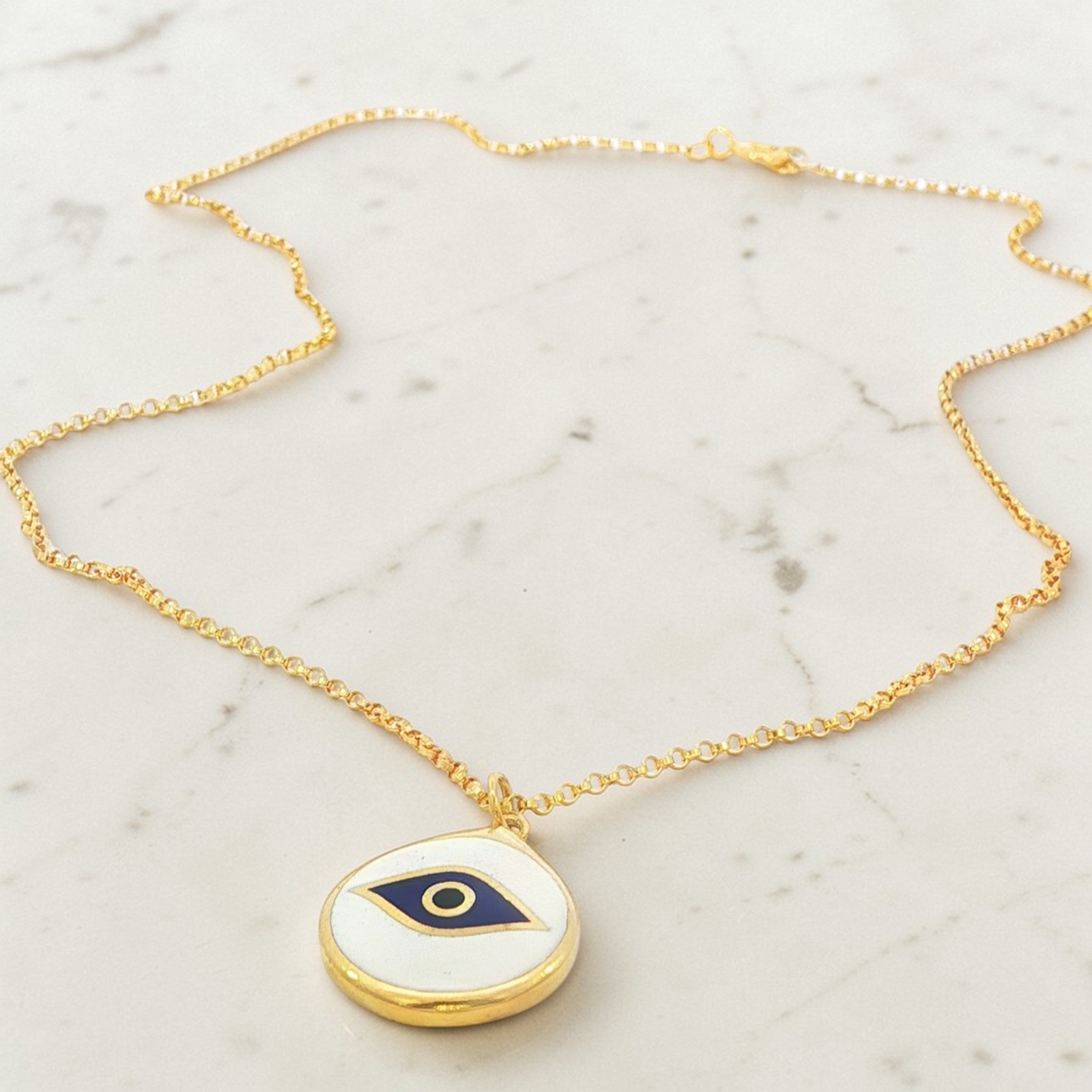
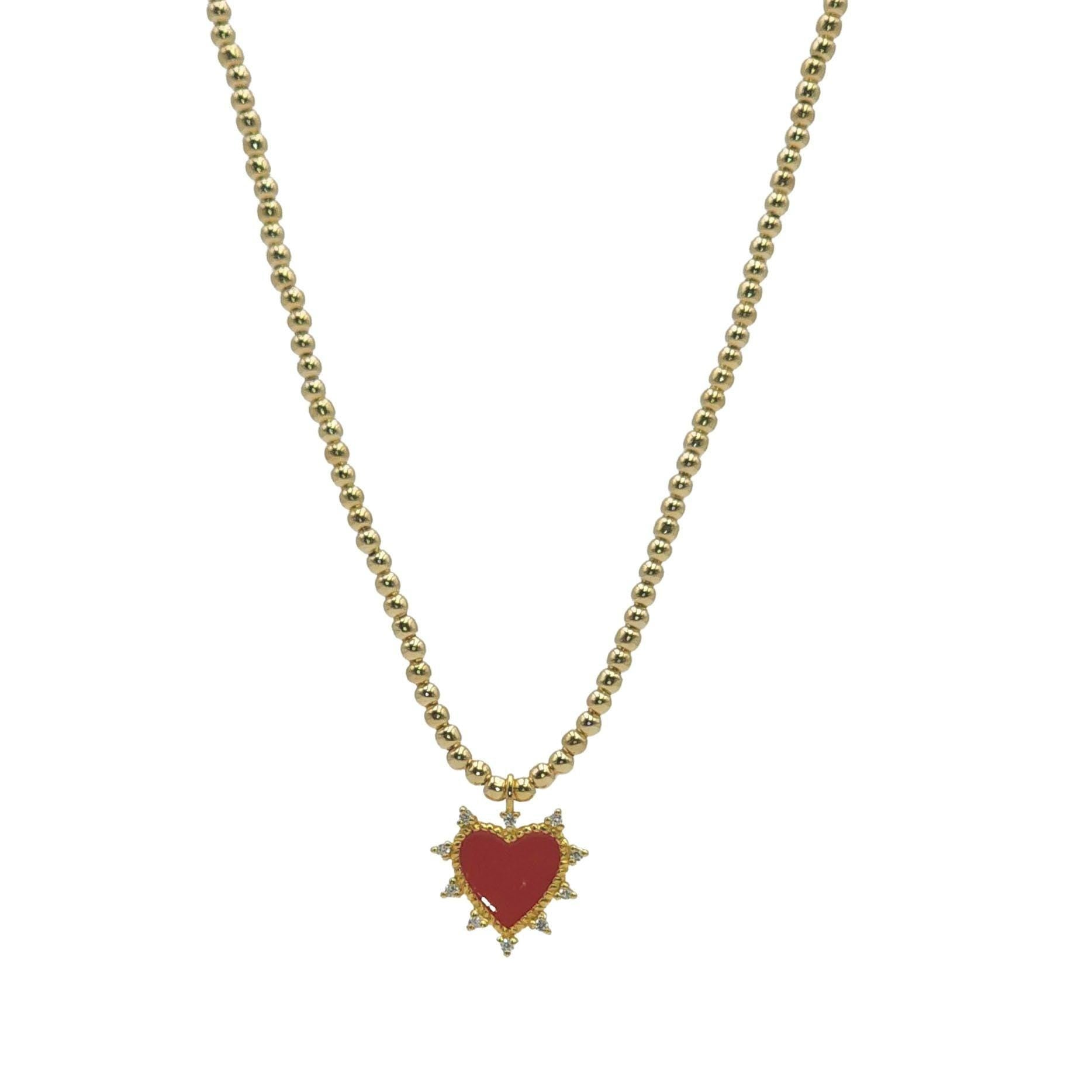
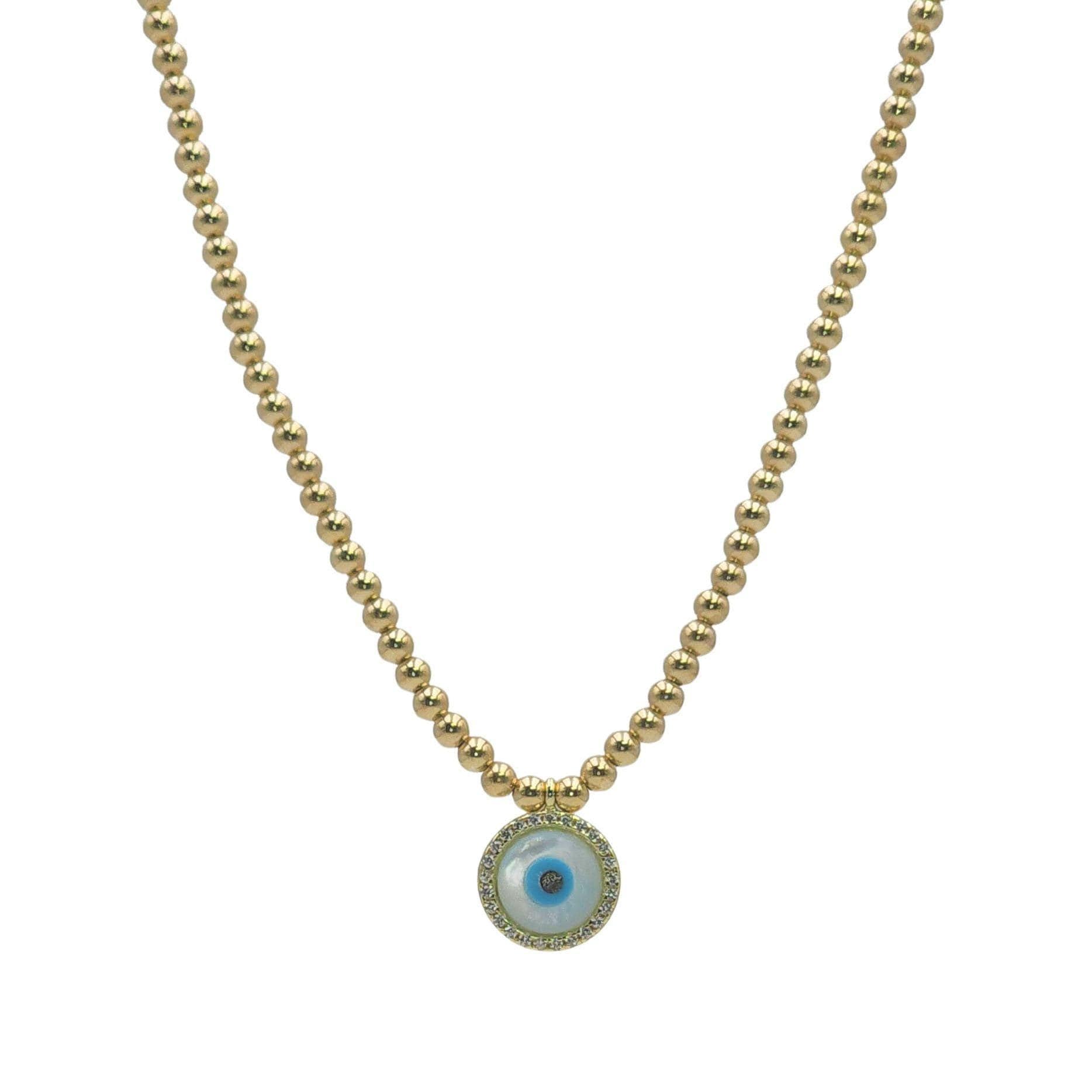
If you enjoy wearing necklaces together, consider pairing the mood pendant with pieces of different lengths and textures rather than choosing several necklaces that sit at exactly the same level. Isabella Celini's necklace collection includes dainty chains, pendants, beaded styles, and layering pieces that can be mixed into different combinations.
For more practical ideas, a guide to necklace layering can help when you want the mood pendant to remain the focal piece without making the stack look crowded.
If you prefer a simpler look, wear the pendant alone with a plain neckline. Purple itself can become the visual detail, especially when the color shifts between violet, lavender, and deeper purple depending on the temperature.
Color-changing jewelry should be handled according to the care instructions supplied with the specific piece.
For other everyday jewelry, simple care habits can help preserve the finish. Isabella Celini's jewelry care guidance recommends gentle cleaning and avoiding harsh chemicals such as chlorine and bleach.
If you're building an everyday jewelry rotation around necklaces, understanding the construction of the pieces matters too. For example, gold-filled necklaces use a mechanically bonded layer of real gold rather than the very thin coating used in standard gold plating.
A mood necklace can sit alongside those everyday pieces as the more playful part of the stack.
Purple on a mood necklace traditionally represents romance, passion, creativity, excitement, and strong emotional energy.
But there is a second answer that matters just as much: the necklace does not actually know what you're feeling.
The purple color appears because the thermochromic material responds to temperature. Skin contact, room temperature, circulation, physical activity, clothing, and other environmental factors can all influence that temperature.
So if your necklace turns purple, you can absolutely enjoy the traditional meaning. Think of it as a symbolic interpretation rather than a scientific reading of your emotions.
And if your necklace stays purple or suddenly changes to purple, temperature is the first thing to consider.
That is what makes mood jewelry fun: the color has a story attached to it, but the science behind the color change is much more straightforward.
Purple traditionally represents romance, passion, creativity, excitement, and emotional intensity. The exact meaning varies between mood-jewelry color charts.
A purple mood necklace is commonly interpreted as showing romantic feelings, passion, creativity, or heightened emotional energy. These are symbolic meanings, not scientific measurements.
Purple is generally given positive or emotionally warm associations on traditional mood charts, including romance, creativity and passion. Mood colors are symbolic rather than objectively good or bad.
Not scientifically. Purple is traditionally associated with romance and love in some mood-jewelry charts, but the necklace itself responds to temperature rather than detecting romantic feelings.
The pendant may turn purple when the temperature around its thermochromic material reaches the range that produces that color. Skin contact, room temperature, physical activity and circulation can all influence the result.
It may remain purple because its temperature stays within the color range associated with purple. Body contact, a warm environment, the necklace's thermochromic calibration, and lighting can all contribute.
Dark purple is sometimes interpreted as stronger passion, deeper emotion, romantic intensity, creativity, or heightened energy. The exact interpretation depends on the necklace's color chart.
Light purple or lavender may traditionally represent affection, gentle romance, imagination, creativity, or emotional warmth. Not every mood necklace uses the same shade system.
No. Color meanings and color sequences vary by manufacturer, thermochromic material, calibration, and product design. Use the chart supplied with your particular necklace when available.
The color-changing mechanism is based on temperature-sensitive material, but the emotional meanings assigned to those colors are symbolic. A mood necklace cannot scientifically identify a person's emotions.
Traditional charts may associate colors such as blue with calmness, green with balance, yellow with nervousness, orange with energy, pink with affection, and purple with romance or passion. The exact meanings vary by product.
Both use temperature-sensitive material to create color changes. Their behavior can differ because a ring sits on the finger while a necklace hangs around the neck and is exposed to different skin, clothing, and environmental temperatures.
Sudden changes can happen when the pendant moves between different temperatures, touches warmer skin, becomes covered by clothing, or experiences changes associated with activity or circulation.
No. It can show a temperature-related color change, but it cannot determine whether you are happy, sad, excited, relaxed, or in love.
It can matter for traditional interpretation if the necklace's chart distinguishes between light purple, violet, and dark purple. However, shade can also change because of temperature, lighting, and the specific thermochromic material used.
Share

Share information about your brand with your customers. Describe a product, make announcements, or welcome customers to your store.